


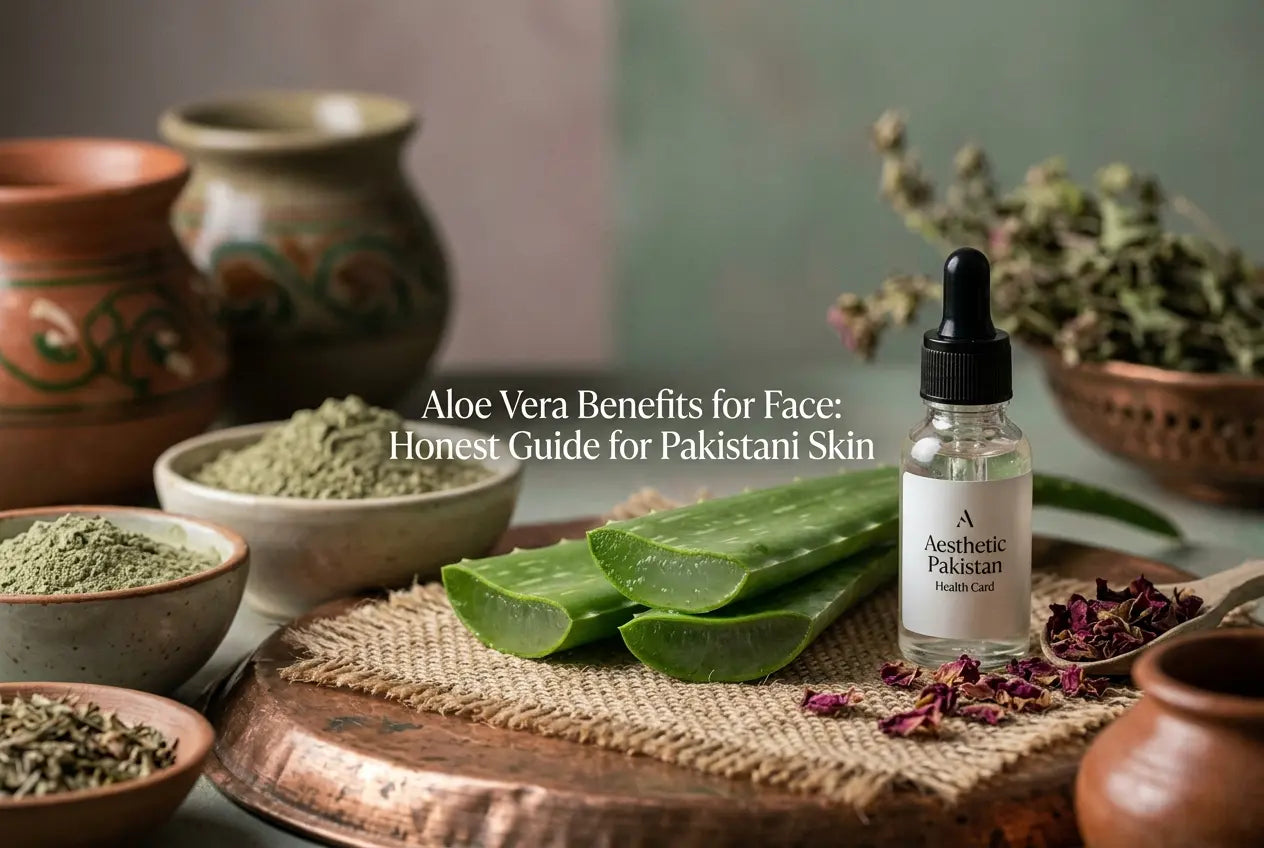
Aloe vera, known in Urdu as kwar gandal, has been part of Pakistani skincare for as long as anyone can remember. Almost every household either grows it in a pot or keeps a tube of it in the bathroom. The reason it has lasted through every passing skincare trend is simple. Used correctly, aloe vera is one of the most genuinely effective natural ingredients available, hydrating, soothing, and gentle enough for almost every skin type.
The catch is that "used correctly" matters more than most people realise. The wrong extraction technique, the wrong commercial product, or the wrong combination, and your soothing aloe mask quickly becomes a source of irritation. This guide covers all the real aloe vera benefits for face care, how to extract and use it safely at home, the difference between fresh and store-bought gel, and the combinations that actually work for Pakistani skin.
Quick Answer: Top Aloe Vera Benefits for Face
If you want the short version, the proven aloe vera benefits for face include:
-
Deep hydration without greasiness
-
Calms acne, redness, and inflammation
-
Soothes sunburn and heat rash
-
Fades mild dark spots and post-acne marks gradually
-
Supports skin barrier repair
-
Reduces fine lines through antioxidant action
-
Helps treat minor wounds, cuts, and ghamoriyan
-
Suits all skin types when used pure and fresh
The detailed sections below explain how each benefit works at a skin level, the right way to extract fresh aloe, and the safety details Pakistani blogs leave out.
What Is Aloe Vera and What Is Inside It?
Aloe vera (Aloe barbadensis miller) is a succulent plant native to dry climates, which is why it thrives across Pakistan. The thick green leaf holds a clear, jelly-like gel that is roughly 98% water. The remaining 2% is where the actual skin benefits come from.
That 2% contains polysaccharides like acemannan, antioxidant vitamins A, C, and E, salicylic acid, amino acids, enzymes, and minerals like zinc and magnesium. According to the National Center for Complementary and Integrative Health, aloe vera has been studied for centuries for its topical wound-healing and anti-inflammatory effects (nccih.nih.gov). It is one of the few herbal remedies whose benefits are backed by genuine clinical evidence.
What most local guides skip is that the leaf also contains a yellow sap called latex, sitting just under the outer skin. That latex contains anthraquinones, which can cause skin irritation, allergic reactions, and even photosensitivity if not properly removed during extraction. This single point matters more than most others in this entire guide.
The Real Aloe Vera Benefits for Face
Here is the honest, science-aware version of what aloe actually does, not the inflated marketing version.
1. Hydrates Without Clogging Pores
Aloe vera is 98% water and absorbs quickly, which makes it one of the rare moisturisers that suits oily, combination, dry, and sensitive skin equally. It does not sit on the surface or leave a greasy film, which is why it works so well in Pakistan's humid summers.
2. Calms Acne and Reduces Breakouts
The salicylic acid in aloe gently unclogs pores while its anti-inflammatory compounds reduce the redness and swelling around active pimples. Used as a thin layer at night, aloe noticeably calms acne flare-ups within days.
3. Soothes Sunburn and Heat Rash
This is the most evidence-backed use. Aloe cools the skin, reduces inflammation, and supports the skin barrier's recovery after sun damage. Many Pakistani families have used it for generations on children for ghamoriyan, and modern science backs the tradition.
4. Fades Mild Dark Spots Gradually
Aloe contains aloesin, a natural compound that mildly inhibits melanin production. The effect is slow, not dramatic, and works best on recent post-acne marks. For deeper pigmentation, our parent guide on dark spots on face removal explains the stronger ingredients you will need.
5. Supports Barrier Repair
Aloe's polysaccharides strengthen the skin's protective barrier, which is exactly what most Pakistani skin needs after years of harsh "whitening" creams or aggressive sun exposure.
6. Anti-Ageing Antioxidant Action
The Vitamins A, C, and E in aloe neutralise free radicals from UV and pollution, which slows the visible signs of ageing like dullness and early fine lines.
7. Heals Minor Cuts and Abrasions
Aloe accelerates wound healing through its acemannan content, which is why pharmacists have included it in burn ointments for decades.
8. Suits Sensitive and Reactive Skin
Aloe vera is one of the gentlest natural ingredients available, making it suitable even for skin that reacts to most other products.
How to Extract Fresh Aloe Vera Gel Safely
This is the section every local blog skips, and it is the difference between aloe that heals and aloe that irritates.
-
Choose a thick, mature leaf and cut it from the base.
-
Stand the leaf upright in a glass for 10 to 15 minutes. The yellow latex will drain out from the cut end. This step is essential and most people skip it.
-
Rinse the leaf under cold water.
-
Lay it flat and trim off the spiky edges.
-
Slice off the top green skin in a thin layer.
-
Scoop out the clear gel using a spoon, avoiding the layer closest to the skin where any remaining latex sits.
-
Whisk or blend the gel briefly until smooth.
-
Store in an airtight glass jar in the fridge for up to one week, or freeze in ice-cube trays for up to two months.
The yellow latex is the single biggest cause of "I tried aloe vera and broke out" complaints. Drain it properly and most aloe sensitivity disappears.
Fresh Aloe Vera vs Commercial Gel: What to Look For
This is the second major gap in Pakistani aloe vera content. Many supermarket "aloe vera gels" contain less than 10% actual aloe, packed with alcohol, fragrance, artificial colour (especially that bright green), and preservatives that irritate skin.
When buying commercial aloe gel in Pakistan, look for:
-
At least 90% aloe vera content listed at the top of the ingredient list
-
No alcohol, fragrance, or artificial colour
-
Naturally clear or very pale, not bright green
-
Sold in pharmacies or trusted skincare brands
A short ingredient list is almost always a better sign than a long one. If your "aloe gel" is bright green, smells strongly of perfume, or feels sticky, the active aloe content is likely too low to deliver any real benefit.
Best Aloe Vera DIY Combinations for Face
These combinations are dermatologist-friendly and work well on Pakistani skin.
For acne and redness: 1 tablespoon fresh aloe gel with 2 drops of tea tree oil. Apply as a spot treatment overnight.
For dry skin glow: 1 tablespoon aloe gel with 1 teaspoon honey. Apply as a 15-minute mask, rinse with lukewarm water.
For under-eye care: Half a teaspoon aloe gel with the contents of half a Vitamin E capsule. Dab gently under eyes before bed. For more on this ingredient, our guide on vitamin E capsule for face covers proper use.
For sunburn relief: Pure chilled aloe gel applied directly. No additions needed.
For hydration mask: 1 tablespoon aloe gel with 1 tablespoon yoghurt and a pinch of turmeric. Apply for 10 minutes, rinse.
Avoid completely: Aloe vera mixed with lemon juice. Despite being widely recommended in Pakistani DIYs, lemon damages the skin barrier and triggers a sun reaction that causes pigmentation. Our full guide on whether lemon for face is safe or not explains the science.
Why Aloe Vera and Vitamin C Work Better Together
The most underrated combination in skincare is aloe vera applied in the morning before a Vitamin C serum, or layered with one in the evening. Aloe calms and hydrates, while Vitamin C brightens and protects against free radicals. Together they soothe the skin during the same routine that targets pigmentation.
For your daily Vitamin C step, a gentle Vitamin C face wash sets the foundation in the morning, and a Fairness Vitamin C face cream provides steady daytime brightening. Pair them with aloe gel at night, and the routine handles inflammation and pigmentation together.
For the full structure that fits Pakistani climate and skin, the best skincare routine for Pakistani women covers the morning and evening sequence step by step.
Who Should Be Careful With Aloe Vera
Aloe is generally safe, but there are situations where caution matters:
-
If you have known plant allergies (especially to lily, onion, garlic family plants), patch test first on the jawline.
-
Pregnant women should avoid ingesting aloe vera but topical use is generally safe.
-
If you experience burning, redness, or itching, stop immediately. This usually means the latex layer was not properly removed during extraction.
-
Avoid applying aloe to broken or bleeding skin.
How Long Until You See Results
Honest timelines, because false promises waste time:
-
Calmer, more hydrated skin: 1 to 3 days
-
Visible reduction in acne redness: 1 to 2 weeks
-
Smoother texture and barrier improvement: 3 to 6 weeks
-
Mild fading of post-acne marks: 8 to 12 weeks
Aloe works gradually but reliably. People who give it 6 weeks always see real change.
Frequently Asked Questions
1. Can I apply aloe vera on my face every day?
Yes. Pure aloe vera gel is one of the few natural ingredients safe for daily use on most skin types. Apply a thin layer once or twice a day. If you notice any irritation, it usually means the gel contains alcohol, fragrance, or unextracted latex.
2. Can I leave aloe vera on my face overnight?
Yes, leaving pure aloe gel on overnight is one of the most effective ways to use it for hydration, acne, and post-sun recovery. Avoid leaving on bright green commercial gels overnight if they contain alcohol or fragrance.
3. Does aloe vera lighten the skin?
Aloe vera does not bleach the skin, but it gently fades mild dark spots and post-acne marks over weeks through its aloesin content. For stubborn pigmentation, pair it with Vitamin C and daily sunscreen for stronger results.
4. Is fresh aloe vera better than commercial aloe gel?
Fresh, properly extracted aloe is the purest form. Commercial gels are convenient but vary widely in quality. Look for 90% or higher aloe content with no alcohol, fragrance, or artificial colour, or extract your own from a home plant.
5. Can aloe vera cause acne or pimples?
Pure aloe rarely causes acne. Breakouts from aloe almost always come from contaminated latex during extraction, or from commercial gels packed with alcohol, fragrance, or fillers. Switch to a purer source and most reactions resolve.
Conclusion
The aloe vera benefits for face are real, well-earned, and now backed by both centuries of tradition and modern science. Used wisely, it is one of the most affordable and effective skincare ingredients available in Pakistan.
The trick is to do it properly. Extract the gel correctly, drain the latex, choose pure commercial products if you do not grow your own, skip the lemon DIYs, and pair aloe with Vitamin C for stronger results. Done this way, kwar gandal earns its place as the calmest, most reliable plant in your routine, and quietly does what many expensive products promise but rarely deliver.


