


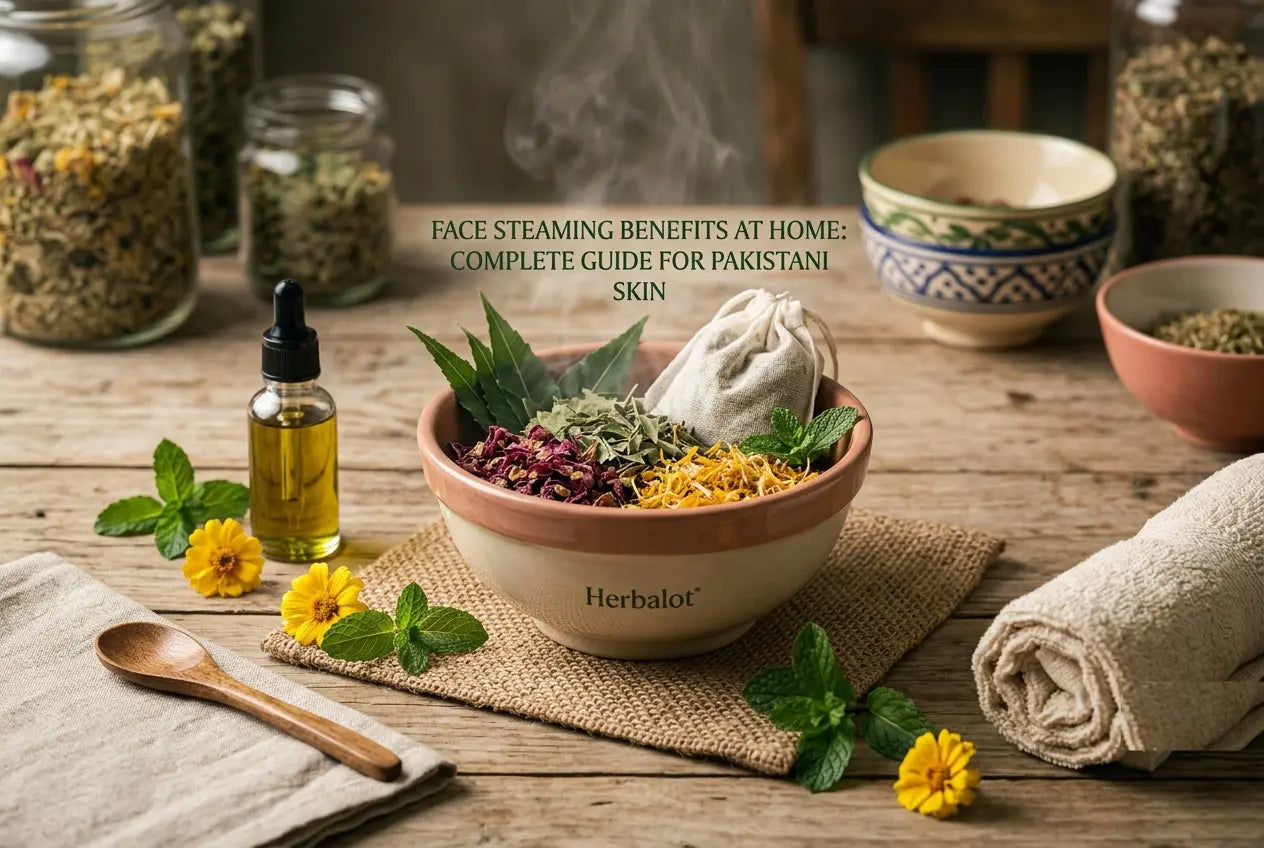
You have probably seen your nani lean over a bowl of hot water with a towel over her head. Turns out, she was right. Face steaming is one of the oldest, cheapest, and most effective skincare rituals in the world, and modern dermatology agrees on most of the benefits. The honest catch is that face steaming only delivers real results when you know why it works, do it safely, and follow it with the right skincare afterwards.
This guide covers all the real face steaming benefits at home, the safety warnings most Pakistani blogs skip, the herbs worth adding, and the post-steam routine that transforms whether your steaming session actually changes your skin or is just a nice warm mist on your face.
Quick Answer: Face Steaming Benefits at Home
The real face steaming benefits include:
-
Softens and loosens clogged pores
-
Helps remove blackheads and dead skin
-
Improves blood circulation for a natural glow
-
Boosts absorption of skincare products by up to 3x
-
Hydrates the skin surface
-
Soothes sinus congestion
-
Creates a relaxing self-care ritual
-
Prepares the skin for gentle exfoliation
The safe way to steam your face at home:
-
Cleanse your face first.
-
Boil water, then let it cool slightly.
-
Pour into a heat-safe bowl and add optional herbs.
-
Drape a towel over your head, keep face 30 to 40 cm above the bowl.
-
Steam for 5 to 10 minutes, not more.
-
Pat dry gently, then apply your skincare while pores are still open.
The detailed sections explain the science behind each benefit, how to steam safely, and the post-steam routine that determines whether you actually see results.
Why Face Steaming Actually Works
The science is simpler than most blogs make it sound. Warm steam does three real things to the skin.
It softens the skin surface. Heat and moisture loosen dead cells, oil, and pollution sitting on your face.
It relaxes the pore openings. Pores do not "open and close" the way most articles claim, but heat softens the sebum and dirt trapped inside them, making blackheads easier to lift out.
It increases skin absorbency. According to WebMD, steaming softens the skin and makes it more receptive to products applied afterwards, which is why serums absorb better on just-steamed skin (webmd.com). This is the single biggest reason to steam.
Steaming does not permanently shrink pores, magically stimulate collagen, or replace a real skincare routine. Its true power is preparing the skin so your actual products work better.
The Real Face Steaming Benefits at Home
Here is the honest, science-aware version of what a home steam does.
1. Deep Cleansing Without Harsh Products
Steam lifts dirt, sunscreen residue, pollution, and makeup that a regular cleanse leaves behind. Especially useful in Karachi's humid summers and Lahore's polluted winters.
2. Easier Blackhead Removal
Steam softens hardened sebum in blackheads. Gentle extraction after steaming is far safer than picking at cold, tight skin.
3. Better Skincare Absorption
This is the benefit worth steaming for. Warm, hydrated skin absorbs actives like Vitamin C, niacinamide, and hyaluronic acid noticeably better than cold skin. A single serum applied post-steam often outperforms the same serum used daily on unprepared skin.
4. A Natural Glow From Increased Circulation
The warmth dilates surface blood vessels, bringing more oxygen and nutrients to the skin. The result is the flushed, glowing look that lasts a few hours after steaming.
5. Sinus and Headache Relief
The steam clears congestion while cleaning the skin, which is why Pakistani households have always used steam for chest and face together.
6. Softer, Smoother Skin Texture
Regular steaming plus proper moisturising gradually improves texture as softening and gentle exfoliation reveal fresher cells.
7. Stress Relief and Ritual
Ten quiet minutes with warm mist and calming herbs is genuine self-care. The mental benefit is real and often understated.
8. Better Results From Exfoliation
Post-steam skin exfoliates more effectively because dead cells are already loosened. A gentle scrub after steaming works far better than one used cold.
How to Steam Your Face Safely: Step by Step
Follow this exact sequence for the best results. Skipping steps is why home steaming often disappoints.
Step 1: Cleanse first. Never steam a dirty face. Trapped makeup and sunscreen sit deeper into open pores. A gentle Vitamin C face wash removes surface impurities without stripping the skin.
Step 2: Boil water and let it cool slightly. Never lean over actively boiling water. A steam burn is more damaging than a burn from boiling water because moisture carries heat deeper into the skin.
Step 3: Choose a heat-safe ceramic or glass bowl. Plastic can release particles when heated.
Step 4: Add optional herbs. Fresh mint (podina), tulsi, chamomile, or a slice of ginger. Skip essential oils, they can irritate the lungs when inhaled in concentrated form.
Step 5: Set up. Sit at a stable table. Keep your face 30 to 40 cm (about a forearm length) above the bowl.
Step 6: Drape a clean towel over your head to trap the steam. Close your eyes.
Step 7: Steam for 5 to 10 minutes. No more. Take 1 minute breaks if it feels too hot.
Step 8: Pat dry, do not rub. With a clean, soft towel.
Step 9: Move to skincare immediately. This is where most people waste the entire benefit. Skin is at peak absorbency for about 10 minutes after steaming.
What to Apply After Steaming
This is where the actual transformation happens. Steaming is only as good as the routine that follows it. At Herbsalot, our Vitamin C range was built for absorption-optimised routines, which is why it pairs naturally with post-steam skin.
Step 1: Gentle Exfoliation (Once a Week)
If you steam once a week, this is the perfect night to exfoliate. A finely milled Vitamin C face scrub lifts away the dead cells that steam has loosened, revealing brighter skin underneath and helping the next steps absorb even better.
Step 2: Apply a Treatment Serum
Vitamin C, niacinamide, or alpha arbutin for pigmentation. Retinol, on non-exfoliation nights, for texture and anti-ageing. Skin drinks in serums far better right after steaming.
Step 3: Lock in With a Brightening Moisturiser
Herbsalot's Fairness Vitamin C face cream seals in the absorption boost and continues the brightening work through the day. Using it after a steam session amplifies its effect noticeably.
Step 4: SPF the Next Morning
If you steamed at night, do not forget your morning SPF 50. Freshly steamed skin is briefly more sensitive to UV. For the full climate-adjusted structure, our best skincare routine for Pakistani women walks through morning and evening care in detail.
Best Herbs to Add to Face Steaming
Fresh, kitchen-friendly options that suit Pakistani skin.
-
Mint (podina). Refreshing and mildly antibacterial. Good for oily skin and acne-prone congestion.
-
Tulsi (holy basil). Calming, antioxidant-rich. Suits sensitive and inflamed skin.
-
Chamomile. Reduces redness and soothes irritation.
-
Green tea leaves. Antioxidant boost. Good for dull skin.
-
Rose petals. Fragrant and gentle, safe for most skin types.
-
A slice of fresh ginger. Warming, especially useful in winter for congested skin.
-
Neem leaves. Antibacterial. Good for acne-prone Pakistani skin.
Avoid completely: Lemon slices in steaming water. The citric acid vapours can irritate sensitive skin, and drops that land on your face can trigger a sun reaction later. Our guide on whether lemon for face is safe or not explains the science.
Common Face Steaming Mistakes
-
Steaming for more than 10 minutes, which dries and inflames skin
-
Standing too close, risking steam burns
-
Using boiling water instead of warm water
-
Adding essential oils, which can irritate lungs and skin
-
Steaming daily, which weakens the barrier
-
Skipping moisturiser afterwards, wasting the absorbency window
-
Picking at blackheads too aggressively during or after steam
-
Steaming with dirty hands or over unclean bowls
Who Should Skip Face Steaming
Face steaming is not universally safe. Skip it if you have:
-
Rosacea or visible broken capillaries. Heat worsens both.
-
Melasma. Heat is a known trigger for melasma flares. Our guide on melasma treatment at home explains why heat management matters.
-
Active severe acne, cystic acne, or open sores. Heat can spread bacteria and worsen inflammation.
-
Sunburned or peeling skin. Give the barrier time to heal first.
-
Very sensitive or eczema-prone skin. Consider a cool damp cloth instead.
-
Very dry skin. Steam only once every 10 to 14 days, and always follow with heavy moisturiser.
How Often Should You Steam Your Face?
-
Oily and combination skin: once a week
-
Normal skin: once a week or every 10 days
-
Dry skin: once every 10 to 14 days
-
Sensitive or mature skin: once every 2 weeks or skip entirely
-
Acne-prone skin: once a week, only when acne is not actively inflamed
Real skin change appears in 4 to 8 weeks of weekly steaming paired with proper follow-up skincare. Without the follow-up, steaming alone rarely changes anything.
Frequently Asked Questions
1. How often should I steam my face at home?
Once a week is enough for most skin types. Dry and sensitive skin should stick to once every 10 to 14 days. Daily steaming damages the skin barrier and offers no extra benefit, so more is not better with this ritual.
2. What should I apply after steaming my face?
Freshly steamed skin absorbs skincare up to 3 times better, so this is when your best products deliver the most. Apply a treatment serum with Vitamin C or niacinamide, then a brightening moisturiser like a Vitamin C cream, and SPF the next morning. Skipping this step wastes the entire benefit.
3. Is face steaming good for oily and acne-prone skin?
Yes, when done correctly. Steaming loosens excess sebum and helps unclog pores, which reduces blackheads and mild acne. Limit sessions to once a week and never steam over actively inflamed cystic pimples, as heat can worsen the infection.
4. Can I add mint, tulsi, or lemon to face steaming water?
Mint, tulsi, chamomile, and neem are safe and beneficial for most skin types. Skip lemon, essential oils, and anything acidic, as vapours from these can irritate the lungs, damage the skin barrier, and cause post-steam pigmentation issues.
5. When should I not steam my face?
Avoid steaming if you have rosacea, melasma, cystic acne, sunburn, or very sensitive skin. Also skip it right before going out into the sun, since freshly steamed skin is briefly more UV-sensitive. Cool compresses are a safer alternative for these situations.
Conclusion
Face steaming benefits at home are real when done right, but they are almost invisible when done wrong. Cleanse first, keep the temperature safe, add gentle herbs, limit sessions to 10 minutes, and skip the ritual entirely if your skin has rosacea, melasma, or active cystic acne.
Most importantly, remember that steaming is the setup, not the show. The routine you follow it with is what transforms your skin. At Herbsalot, we build products for exactly these moments, when your skin is primed to absorb care and give real results back. Pair a proper follow-up routine with your weekly steam. It becomes the most rewarding ten minutes of your week.


