


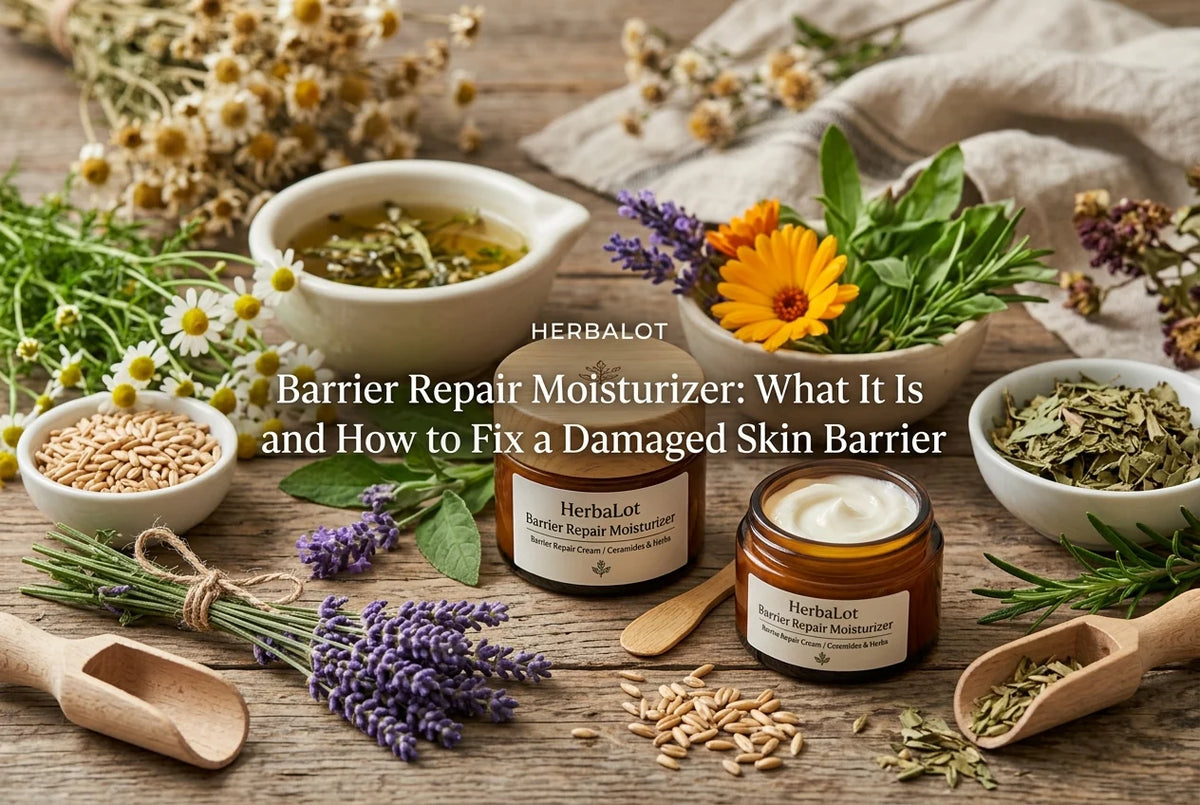
Your skin suddenly stings when you apply products that never bothered it before. It looks red, feels tight, flakes in patches, and breaks out for no clear reason. If that sounds familiar, your skin barrier is likely damaged, and a barrier repair moisturizer is exactly what it needs. Here is how to understand and fix it.
Quick answer: A barrier repair moisturizer is a moisturizer formulated to rebuild and strengthen the skin's protective outer layer using ingredients like ceramides, glycerin, panthenol, hyaluronic acid and soothing agents. It restores hydration, calms irritation, and repairs a damaged barrier over two to four weeks. It suits sensitive, dry, irritated, or over-exfoliated skin.
This detailed guide explains what the skin barrier is, how it gets damaged, what a barrier repair moisturizer does, which ingredients to look for, and how to rebuild healthy, resilient skin.
What Is the Skin Barrier?
The skin barrier is the outermost layer of your skin that locks in moisture and keeps out irritants, bacteria and pollution. When it is healthy, skin looks calm and hydrated. When it is damaged, skin becomes dry, sensitive, red and reactive.
Think of your skin barrier as a brick wall. The skin cells are the bricks, and the natural fats between them, including ceramides, are the mortar holding everything together. This wall keeps water inside your skin and harmful things outside. When the mortar breaks down, the wall develops gaps. Moisture escapes, so skin gets dry and tight, and irritants slip in, so skin gets red, stingy and reactive. Repairing the barrier means rebuilding that mortar, which is exactly what a barrier repair moisturizer is designed to do.
What Causes a Damaged Skin Barrier?
A damaged skin barrier is caused by over-cleansing, harsh products, over-exfoliation, using too many strong actives, hot water, weather extremes, and skipping moisturizer. These strip the protective fats and weaken the barrier over time.
Here are the most common causes, many of them self-inflicted:
-
Over-cleansing or harsh soap. Strips the natural oils that hold the barrier together.
-
Over-exfoliating. Scrubbing or using acids too often wears the barrier down.
-
Too many strong actives at once. Piling on retinol, acids and vitamin C overwhelms the skin.
-
Hot water. Dissolves the protective fats faster than lukewarm water.
-
Weather extremes. Harsh sun, dry winter air and constant air conditioning all dehydrate the barrier.
-
Skipping moisturizer. Leaves the barrier without the support it needs to stay intact.
In Pakistan's climate, the combination of strong sun, pollution, hard water and dry indoor air makes barrier damage especially common.
What Are the Signs of a Damaged Skin Barrier?
The signs of a damaged skin barrier are tightness, dryness, flaking, redness, stinging or burning when applying products, increased sensitivity, dullness, and unexpected breakouts. Skin feels reactive and uncomfortable rather than calm.
Watch for these symptoms:
-
Tight, dry skin that does not improve with moisturizer alone
-
Flaking or rough, uneven patches
-
Redness and irritation
-
Stinging or burning from products that used to feel fine
-
New sensitivity or reactivity
-
Dull, tired-looking skin
-
Breakouts that appear without an obvious cause
If several of these sound familiar, your barrier needs repair, not more active ingredients.
What Does a Barrier Repair Moisturizer Do?
A barrier repair moisturizer rebuilds the skin's protective layer by replenishing lost fats and moisture, sealing in hydration, calming irritation, and strengthening the skin so it can defend itself again. It restores comfort and resilience to damaged skin.
A barrier repair moisturizer works in three ways at once. First, it replaces the lost fats and lipids, rebuilding the mortar between skin cells. Second, it draws in and seals moisture, reversing the dryness and tightness. Third, it soothes the inflammation and sensitivity that come with a damaged barrier. The result over a few weeks is skin that feels calm, hydrated and comfortable, and that can once again tolerate the products and environment that were irritating it.
Which Ingredients Should a Barrier Repair Moisturizer Have?
A barrier repair moisturizer should contain ceramides to rebuild the barrier, humectants like glycerin and hyaluronic acid to hydrate, soothing agents like panthenol and niacinamide to calm irritation, and emollients to soften and protect the skin.
Look for these proven barrier-supporting ingredients:
-
Ceramides. The key repair ingredient, replacing the fats that hold the barrier together.
-
Hyaluronic acid. A humectant that deeply hydrates and plumps the skin.
-
Glycerin. A reliable humectant that keeps skin soft and moisturized.
-
Panthenol (Pro Vitamin B5). Soothes irritation and supports barrier repair.
-
Niacinamide. Strengthens the barrier and calms redness.
-
Soothing extracts and emollients. Comfort and soften stressed skin.
These ingredients also appear in good cleansers and serums. For example, a gentle, barrier-friendly cleanser like the Hyaluronic Acid Face Wash cleans without stripping, which protects the barrier while you repair it.
How Do You Repair a Damaged Skin Barrier?
To repair a damaged skin barrier, simplify your routine, stop all harsh products and exfoliation, cleanse gently, apply a barrier repair moisturizer twice daily, protect skin with sunscreen, and give it two to four weeks to heal.
Follow this recovery plan:
-
Simplify your routine. Pause retinol, acids, scrubs and strong actives completely.
-
Cleanse gently. Switch to a mild, hydrating, sulphate-free cleanser and lukewarm water.
-
Moisturize twice daily. Apply a barrier repair moisturizer morning and night to rebuild and hydrate.
-
Add hydration underneath. A hydrating serum with hyaluronic acid or panthenol boosts recovery.
-
Protect with sunscreen. A damaged barrier is more vulnerable to sun, so daily protection matters.
-
Be patient. Give your skin two to four weeks of gentle care before reintroducing any actives, one at a time.
Doing less is the whole point of barrier repair. Your skin heals when you stop overwhelming it.
How Long Does It Take to Repair the Skin Barrier?
A damaged skin barrier usually takes two to four weeks to repair with gentle, consistent care, though severe damage can take longer. You feel relief from tightness and irritation within days, while full resilience returns over several weeks.
-
First few days: Tightness, stinging and irritation start to ease.
-
Weeks 1 to 2: Dryness, flaking and redness noticeably reduce.
-
Weeks 2 to 4: Skin feels calm, hydrated and resilient again.
Skin renews on a roughly 28-day cycle, so give your barrier a full month of gentle care, and reintroduce actives slowly to avoid damaging it again.
When Should You See a Dermatologist?
See a dermatologist if your skin barrier does not improve after four to six weeks of gentle care, if you have severe redness, cracking, pain or signs of infection, or if you suspect a condition like eczema or rosacea rather than simple barrier damage.
Most barrier damage heals with gentle care at home, but persistent or severe symptoms deserve professional attention, since conditions like eczema need targeted treatment. Always introduce one new product at a time and patch test, especially while your skin is recovering.
Quick Recap
-
The skin barrier locks in moisture and keeps out irritants; damage makes skin dry, red and reactive.
-
Common causes are over-cleansing, over-exfoliating, harsh products, hot water and weather extremes.
-
A barrier repair moisturizer rebuilds lost fats, hydrates, and soothes irritation.
-
Look for ceramides, hyaluronic acid, glycerin, panthenol and niacinamide.
-
Repair your barrier by simplifying your routine, cleansing gently and moisturizing twice daily.
-
Expect recovery over two to four weeks with consistent, gentle care.
Rebuilding a stressed barrier starts with gentle cleansing. A mild, hydrating option like the Hyaluronic Acid Face Wash cleans without stripping, with delivery across Pakistan.
Frequently Asked Questions
What is a barrier repair moisturizer?
A barrier repair moisturizer is formulated to rebuild and strengthen the skin's protective outer layer using ingredients like ceramides, glycerin, panthenol and hyaluronic acid. It restores hydration, calms irritation and repairs a damaged barrier over a few weeks.
How do I know if my skin barrier is damaged?
Signs include tightness, dryness, flaking, redness, stinging when applying products, new sensitivity, dullness and unexpected breakouts. If your skin feels reactive and uncomfortable, your barrier likely needs repair.
How long does it take to repair a damaged skin barrier?
Most barriers repair in two to four weeks with gentle, consistent care. You feel relief from tightness and irritation within days, while full resilience returns over several weeks as the skin renews.
What ingredients repair the skin barrier?
Ceramides rebuild the barrier, hyaluronic acid and glycerin hydrate, and panthenol and niacinamide soothe and strengthen. A moisturizer combining these supports fast, effective barrier repair.
Can over-exfoliating damage the skin barrier?
Yes. Over-exfoliating with scrubs or acids wears down the protective layer, leading to dryness, redness and sensitivity. Pause exfoliation completely while your barrier heals, then reintroduce it gently.
Does oily skin need a barrier repair moisturizer?
Yes. Oily skin can have a damaged barrier too, and skipping moisturizer makes it worse by triggering more oil. Choose a lightweight, non-greasy barrier repair moisturizer for oily skin.


