


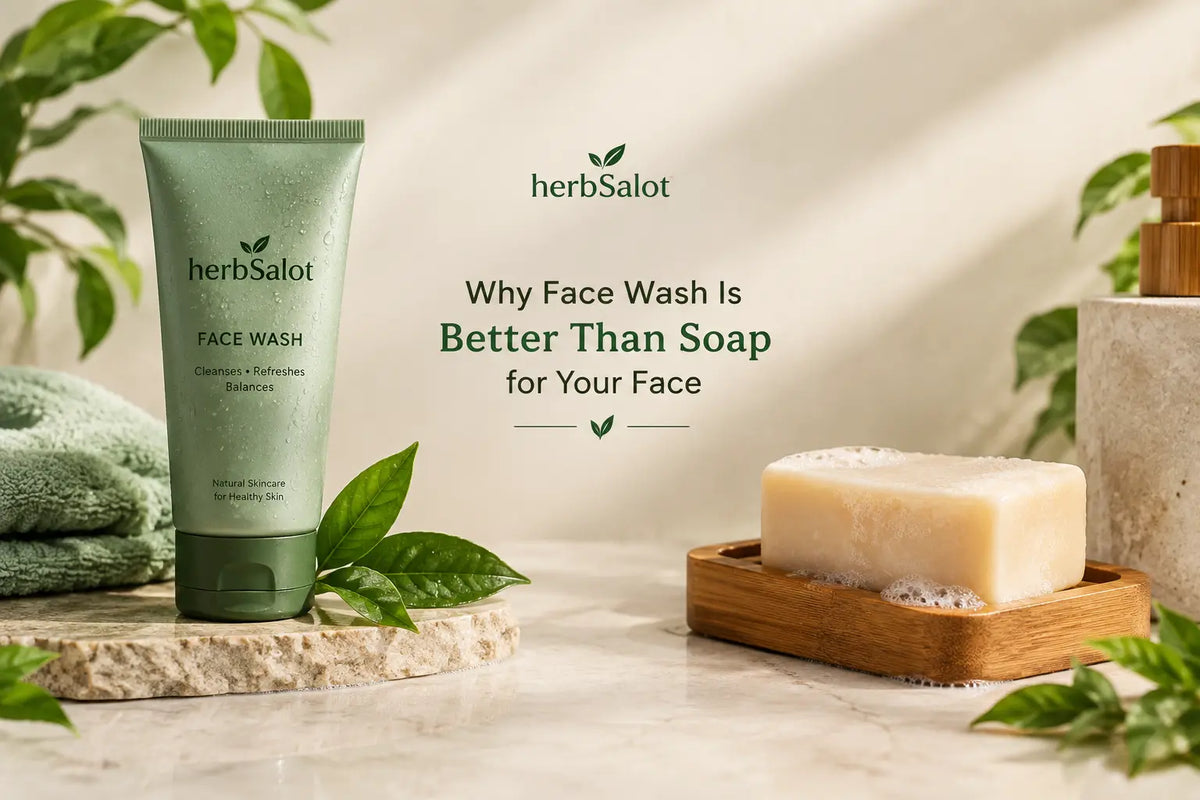
You have probably done it a hundred times: reached for the same bar of soap you use on your body and rubbed it across your face. It feels clean, so it must be fine, right? Not quite. That tight, squeaky feeling after washing is not a sign of clean skin. It is a sign your skin barrier has just been stripped, and over time, using soap on your face causes more problems than it solves.
Face wash is better than soap for your face because it is pH-balanced to match your skin, cleanses without stripping natural oils, and is formulated for the delicate facial skin barrier. Ordinary soap is highly alkaline, which disrupts your skin's pH, causes dryness, tightness and irritation, and can trigger more oil, breakouts and sensitivity over time.
This guide explains the real difference between face wash and soap, why soap harms facial skin, and how choosing the right cleanser protects and improves your complexion.
What Is the Difference Between Face Wash and Soap?
The main difference is that face wash is a gentle, pH-balanced cleanser made for the delicate skin on your face, while soap is a harsh, alkaline cleanser designed for the thicker, more resilient skin on your body. The two are not interchangeable.
Your facial skin is thinner, more sensitive, and more exposed to sun, pollution and daily stress than the skin on your body. It needs a cleanser that removes dirt, excess oil and impurities while keeping its protective barrier and natural moisture intact. That is exactly what a face wash is formulated to do. Soap, by contrast, is built to cut through heavy grease and grime on the body, so it is far more aggressive. Using it on your face is like using a heavy-duty cleaner on a delicate fabric: it works, but it damages what it touches.
Why Is Soap Bad for Your Face?
Soap is bad for your face because it is highly alkaline, with a pH far above your skin's natural level. This disrupts the acid mantle that protects your skin, stripping away natural oils and leaving skin dry, tight, irritated and more prone to breakouts and sensitivity.
Here is what actually happens when you wash your face with soap. Your skin has a slightly acidic protective layer called the acid mantle, which keeps moisture in and bacteria out. Soap's high alkalinity throws this balance off. The result is a cascade of problems:
-
Dryness and tightness as natural oils are stripped away.
-
Rebound oiliness, where stripped skin overproduces oil to compensate, making oily skin worse.
-
Irritation and redness, especially on sensitive skin.
-
A weakened skin barrier, leading to more breakouts, dullness and premature ageing over time.
So the "deep clean" feeling soap gives is really the feeling of a compromised barrier, not healthy skin.
Why Is Face Wash Better for Your Facial Skin?
Face wash is better because it is pH-balanced, gentle, and formulated with ingredients that cleanse the face without stripping it. It removes oil, sunscreen, makeup and pollution while supporting hydration, so skin feels clean, soft and comfortable rather than tight.
A good facial cleanser is designed around the needs of facial skin:
-
It matches your skin's pH, so it protects the acid mantle instead of destroying it.
-
It cleanses gently, lifting away impurities without harsh stripping.
-
It targets specific concerns, with formulas for oily, dry, acne-prone or dull skin.
-
It often adds beneficial ingredients, like hydrating, soothing or brightening actives that soap simply does not contain.
-
It leaves skin balanced, clean but soft, never tight or squeaky.
This is why dermatologists consistently recommend a proper face wash over soap, and why it is the correct first step of any skincare routine. You can browse options for every skin type in the HerbsAlot face washes.
Does Using Soap on Your Face Cause Acne and Oily Skin?
Yes, using soap on your face can worsen acne and oily skin. By stripping the skin barrier, soap triggers rebound oil production and disrupts the balance that keeps skin clear, which can lead to more clogged pores, breakouts and shine over time.
This surprises many people, because soap feels like it is removing oil. And it does, briefly. But when soap strips your skin, your oil glands react to the sudden dryness by producing even more sebum to protect the skin. That excess oil then mixes with dead skin cells and clogs pores, leading to blackheads and pimples. A pH-balanced face wash, especially one formulated for oily or acne-prone skin, cleanses without triggering this cycle, which is why it keeps skin clearer in the long run.
How Do You Choose the Right Face Wash for Your Skin?
To choose the right face wash, match it to your skin type: oil-control cleansers for oily skin, hydrating ones for dry skin, gentle formulas for sensitive skin, and targeted actives for acne, dullness or uneven tone. A pH-balanced, sulphate-free base suits everyone.
|
Your skin type or concern |
What to look for in a face wash |
|
Oily, shiny skin |
Oil-control, charcoal or gel-based, mattifying |
|
Acne-prone skin |
Neem or antibacterial, non-comedogenic |
|
Dry, tight skin |
Hydrating, creamy, with humectants |
|
Dull, uneven tone |
Vitamin C or brightening actives |
|
Sensitive skin |
Gentle, fragrance-light, sulphate-free |
Matching your cleanser to your skin is what turns face wash from a basic step into a genuinely effective one. Whatever your skin type, a proper facial cleanser will always serve your skin better than a bar of soap.
Quick Recap
-
Face wash is pH-balanced and gentle; soap is alkaline and harsh on facial skin.
-
Soap strips the acid mantle, causing dryness, tightness, irritation and rebound oil.
-
Face wash cleanses without stripping, protecting the skin barrier and moisture.
-
Using soap on your face can worsen acne, oiliness and sensitivity over time.
-
Choose a face wash matched to your skin type for the best results.
-
A proper cleanser is the correct first step of every skincare routine.
Ready to treat your face right? Find a cleanser matched to your skin in the face wash range, with delivery across Pakistan.
Frequently Asked Questions
Is face wash better than soap for your face?
Yes. Face wash is pH-balanced and formulated for delicate facial skin, so it cleanses without stripping natural oils. Soap is highly alkaline and disrupts the skin barrier, causing dryness, irritation and, over time, more oil and breakouts.
Why is soap bad for your face?
Soap is highly alkaline, which disrupts your skin's natural acidic protective layer, the acid mantle. This strips away moisture and natural oils, leaving skin tight, dry, irritated and more prone to breakouts and sensitivity.
Can I use body soap on my face?
It is not recommended. Body soap is made for the thicker, more resilient skin on your body and is too harsh for the delicate skin on your face. A pH-balanced face wash cleanses facial skin without damaging it.
Does soap cause pimples on the face?
It can. By stripping the skin barrier, soap triggers rebound oil production, which clogs pores and can lead to more blackheads and pimples over time. A face wash suited to your skin type helps keep skin clearer.
Is face wash necessary, or is water enough?
Water alone does not remove oil, sunscreen, makeup and pollution properly. A face wash is necessary to cleanse the skin effectively, and it is gentler and more effective than soap for the face.
Which face wash is best for my skin?
Choose one matched to your skin type: oil-control or charcoal for oily skin, neem for acne-prone skin, hydrating for dry skin, and gentle sulphate-free formulas for sensitive skin.


