


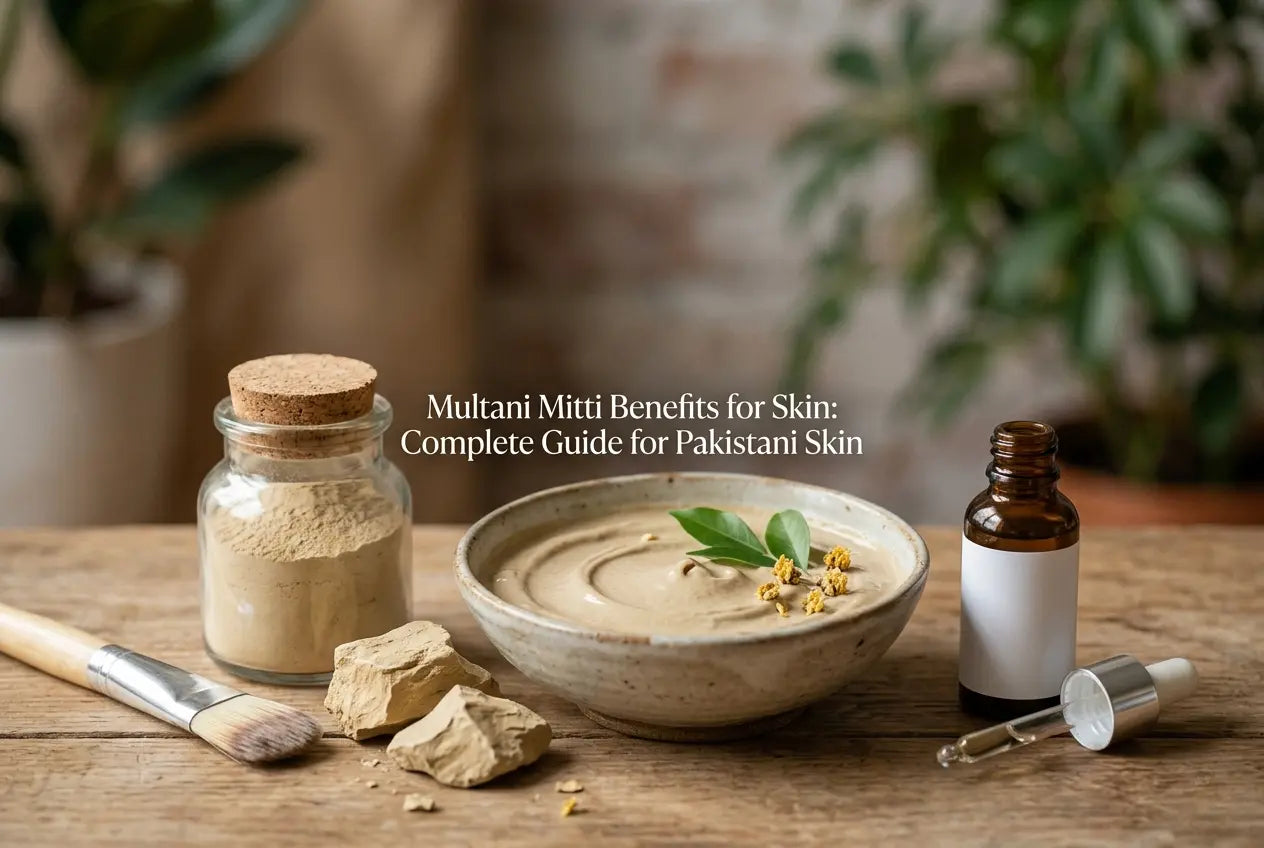
Multani mitti, named after the city of Multan, has been part of Pakistani skincare for generations long before serums and sheet masks existed. The reason it has stayed in nani's beauty kit through every passing trend is simple. When used correctly, it works. Modern dermatology now confirms what desi households always knew, that this humble clay genuinely helps with oil, acne, dullness, and tan.
But the way it is used matters. Used wrong, multani mitti can dry your skin, irritate it, and even worsen the pigmentation you were trying to fix. This guide covers all the proven multani mitti benefits for skin, the right way to use it for each skin type, the recipes that actually work, and the situations where you should skip it entirely.
Quick Answer: Top Multani Mitti Benefits for Skin
If you want the short version, multani mitti benefits for skin include:
-
Controls excess oil and shine
-
Deep cleanses pores and removes blackheads
-
Helps with acne and breakouts
-
Reduces tan and brightens dull skin
-
Soothes sunburn, rashes, and skin irritation
-
Gently exfoliates dead skin cells
-
Improves skin texture over time
-
Cools the skin in hot, humid weather
The detailed sections below explain how each benefit works, how often to apply it, and how to adjust the recipe for your skin type.
What is Multani Mitti?
Multani mitti, also called Fuller's earth, is a mineral-rich natural clay that was traditionally mined in and around Multan, Pakistan. It is made primarily of hydrated aluminium silicates along with silica, magnesium, calcium, and iron oxide. These minerals give the clay its strong oil-absorbing, gently exfoliating, and cooling properties.
According to Healthline, Fuller's earth has been used for centuries to absorb oil and impurities from skin and is recognised for its drawing and cleansing effects (healthline.com). What makes it special is that it does this without harsh chemicals, which is why it remains a trusted ingredient in herbal skincare across South Asia.
The Real Multani Mitti Benefits for Skin
This is where most competitor blogs stop at a quick list. Here is the proper, science-backed version of why each benefit works.
1. Controls Oil and Shine
Multani mitti is one of the most effective natural absorbents available. Its mineral structure pulls excess sebum from the surface of the skin, leaving the face matte and fresh. For people in Karachi, Lahore, and other hot, humid cities, where shine builds up by midday, a weekly multani mitti mask makes a visible difference in how oily the skin feels through the week.
2. Deep Cleanses and Unclogs Pores
Sweat, sunscreen, makeup, and pollution settle into pores every day. Multani mitti works as a gentle clay magnet that draws out this buildup, leaving pores noticeably cleaner. With regular use, blackheads on the nose and chin reduce.
3. Helps With Acne and Breakouts
Acne thrives on excess oil, bacteria, and inflammation. Multani mitti addresses the first two by absorbing oil and gently disinfecting the surface, while its cooling action calms inflammation. This is why so many Pakistani teenagers grow up with multani mitti as a weekly ritual during exam stress flare-ups.
4. Reduces Tan and Dullness
Pakistan's strong UV exposure leaves a layer of tan and dead, dull skin on the surface. Multani mitti gently lifts this layer away, which is why your face looks visibly brighter after rinsing the mask. It does not bleach the skin, it simply uncovers the natural tone underneath. If pigmentation and tan are a bigger concern for you, our parent guide on dark spots on face removal explains how to fade them properly using both home remedies and proven actives.
5. Soothes Irritation, Rashes, and Sunburn
Magnesium and silica in the clay have a calming, anti-inflammatory effect. A thin multani mitti and rose water paste cools sunburn, eases prickly heat, and reduces redness after a day in the sun. Many Pakistani families use it on children for ghamoriyan (heat rash) for this exact reason.
6. Gently Exfoliates Dead Skin
As the clay dries on the face, it lightly grips dead skin cells. When you wash it off, those cells come away with it. This is mild, mechanical exfoliation that suits most skin types when not overdone.
7. Improves Texture Over Time
Smaller pores, less surface oil, and clearer cells reflect light better. Within four to six weeks of weekly use, most people notice their skin feels and looks smoother.
8. Cools Hot, Humid Skin
Multani mitti has a natural cooling effect on the skin, which is why it has long been an unofficial summer beauty ritual in Pakistan. Applied chilled with rose water, it offers genuine relief during the worst heat months.
Multani Mitti for Different Skin Types
This is the section most blogs skip and the reason so many people end up with dry, irritated skin from using multani mitti wrong. The same clay needs different pairings for different skin.
Oily and Acne-Prone Skin
This is what multani mitti was made for. Mix with rose water or plain water, apply for 10 to 12 minutes, and rinse before it cracks. Use one to two times a week.
Combination Skin
Apply only to the oily T-zone, not the cheeks. Use rose water for the mix. Once a week is enough.
Dry Skin
Used straight, multani mitti can worsen dryness. Mix it with full-fat yoghurt, honey, or milk instead of water. Use only once every 10 to 14 days. Keep it on for no more than 8 minutes, and never let it dry fully. Apply moisturiser immediately after.
Sensitive Skin
Patch test on the jawline first. If your skin tolerates it, mix only with yoghurt or aloe vera gel and use no more than once every two weeks.
Best Multani Mitti Face Pack Recipes
Each of these is built for a specific outcome. Use them as a weekly ritual, not a daily one.
For oily skin and acne: 1 tablespoon multani mitti, 1 teaspoon rose water, a few drops of fresh aloe vera gel. Apply, leave 10 to 12 minutes, rinse with cool water.
For dullness and tan: 1 tablespoon multani mitti, 1 teaspoon yoghurt, a pinch of turmeric. Apply, leave 8 to 10 minutes, rinse and follow with moisturiser.
For dry skin glow: 1 tablespoon multani mitti, 1 teaspoon honey, 1 teaspoon milk. Apply, leave 7 to 8 minutes, rinse before it dries fully.
For sunburn and heat rash: 1 tablespoon multani mitti, 2 teaspoons rose water, a few drops of cucumber juice. Apply cool, leave 8 minutes, rinse gently.
For an event-day glow: 1 tablespoon multani mitti, 1 teaspoon yoghurt, half teaspoon sandalwood powder. Apply, leave 10 minutes, rinse and pat dry.
For more home remedies and the proper natural routine to pair these with, our guide on how to get fair skin naturally at home walks through exactly which natural ingredients work and which to avoid.
When You Should Not Use Multani Mitti
This is where most local blogs go silent. Multani mitti is natural, but it is not for every situation. Skip it if your skin is currently inflamed, broken, or has active eczema. Skip it if your skin has been over-exfoliated and feels raw. Avoid if you have used a strong retinoid or chemical peel in the last 48 hours. People with very dry or mature skin should use it sparingly because excessive oil absorption can leave the skin tight and stripped.
Used 3 to 4 times a week, multani mitti dries the skin barrier and triggers more oil production, the opposite of what you want. Once a week is the sweet spot for most people.
Where Multani Mitti Fits in a Modern Routine
A clay mask is a weekly support, not your full skincare. The most effective approach is to use multani mitti once a week as a deep-cleansing reset, and rely on a consistent daily routine for ongoing brightness and oil control. A daily Vitamin C face wash handles surface oil and antioxidant protection, a Fairness Vitamin C face cream supports steady brightening, and a sunscreen protects everything you build.
For the full structure that fits Pakistani skin and climate, the best skincare routine for Pakistani women covers exactly how a clay mask, serum, moisturiser, and SPF work together. And if you want to feed your skin from within at the same time, our guide on foods for glowing skin explains the nutrition side of the equation.
How Long Until You See Results
Realistic expectations matter. Most people see visibly fresher, less oily skin after the very first use. Real improvement in pore size, breakouts, and tan takes 4 to 6 weeks of consistent weekly use. Long-term skin texture benefits build over 3 months. Anyone promising visible "fairness" overnight from one mask is overselling.
Frequently Asked Questions
1. Can I use multani mitti on my face every day? No. Daily use dries the skin and strips its natural oils, which leads to rebound oiliness, irritation, and breakouts. Once a week is enough for oily skin, and once every 10 to 14 days for dry or sensitive skin.
2. Does multani mitti make skin fairer? Multani mitti does not change your genetic skin tone, but it removes tan, dead skin, and dullness, so the natural tone underneath looks brighter. The effect is brightening, not bleaching, which is the safer and healthier goal.
3. Is multani mitti good for acne and pimples? Yes. It absorbs the excess oil, calms inflammation, and gently disinfects the surface that drives most breakouts. Use it once a week with rose water and aloe vera for the best results without overdrying.
4. Can multani mitti remove dark spots permanently? Not on its own. It can fade surface dullness and mild tan, but stubborn dark spots and post-acne marks need targeted actives like Vitamin C, niacinamide, and daily sunscreen along with weekly clay masks for real change.
5. What should I mix multani mitti with for the best results? For oily skin, mix with rose water and aloe vera. For dry skin, mix with yoghurt or milk and honey. For sunburn and heat rash, mix with rose water and cucumber juice. Avoid mixing with lemon juice, which damages the skin barrier.
Conclusion
The multani mitti benefits for skin are real, well-earned, and now scientifically supported. Used wisely, once a week, with the right mix for your skin type, this old desi clay quietly outperforms many expensive products on the market.
But like all good ingredients, it works best when respected. Do not overuse it. Pair it with hydration, a calm daily routine, and daily sunscreen. Treat multani mitti as the supporting actor in your skincare, not the lead, and you will keep enjoying its benefits for years without the downsides that catch most people out.


