


There is a reason your moisturizer stopped working. A reason your skin stings when you apply products it used to tolerate just fine. The reason it feels dry and oily at the same time, breaks out randomly, and looks dull no matter how many serums you layer on top of it. That reason, in almost every case, is a damaged skin barrier. Skin barrier repair skincare is not a trend or a marketing term. It is the foundation of every healthy, glowing, well-functioning complexion, and once you understand what the barrier actually is, how it breaks, and what it takes to rebuild it, you will never look at your skincare routine the same way again.
This is the complete guide to your skin barrier: what it is, what damages it, how to recognize when it is compromised, and exactly how to repair it with the right ingredients and habits.
What Is the Skin Barrier?
Your skin barrier is the outermost layer of your skin, scientifically known as the stratum corneum. It is the very top of the epidermis, and despite being microscopically thin, it performs some of the most critical functions your skin has.
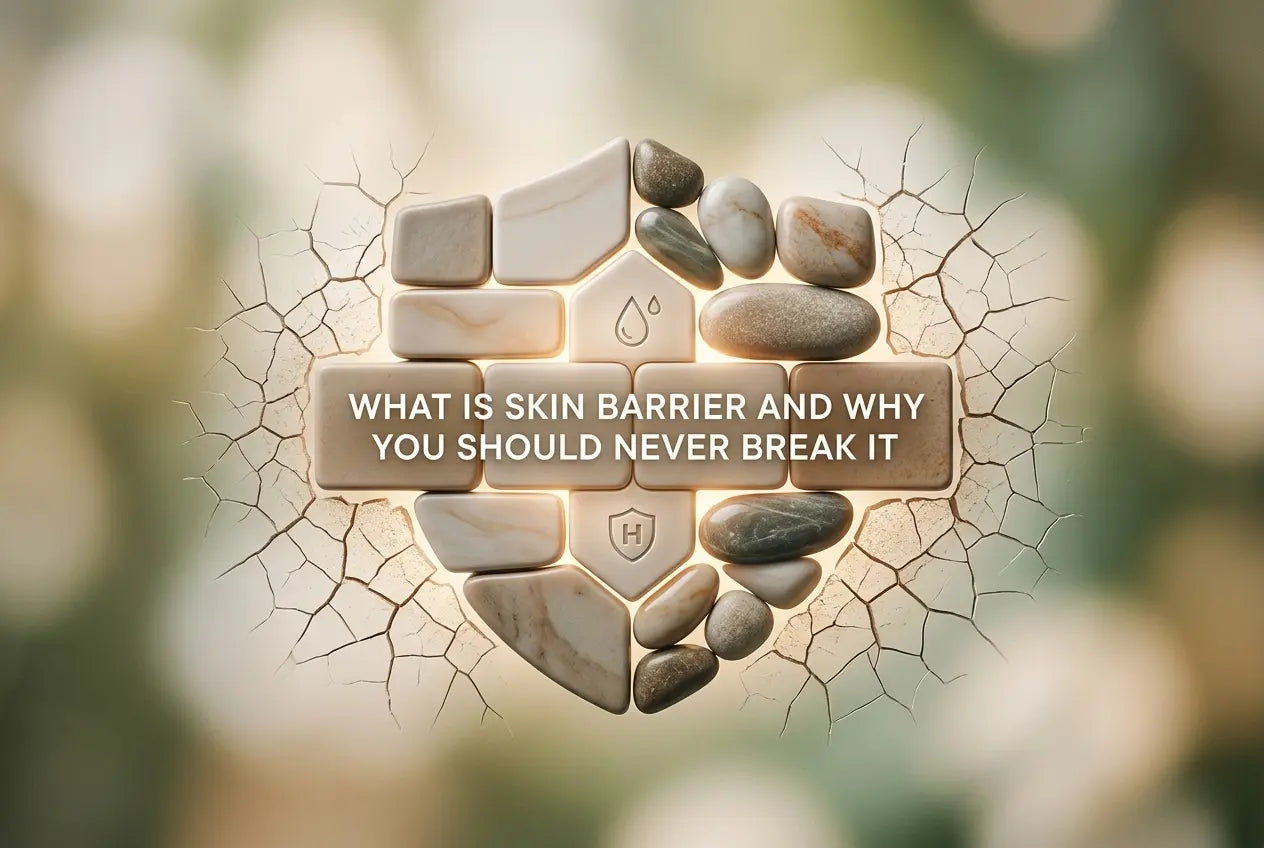
The most useful way to understand it is through the brick-and-mortar model. Imagine the skin barrier as a wall where the bricks are flattened, dead skin cells called corneocytes, and the mortar holding them together is a carefully balanced mixture of lipids, specifically ceramides, cholesterol, and free fatty acids. When this wall is intact, it does two things simultaneously: it keeps moisture inside the skin where it belongs, and it keeps everything harmful outside, including bacteria, pollution, allergens, and irritants.
Published research in the National Institutes of Health confirms that the stratum corneum acts as a permeability barrier to sustain terrestrial life, preventing excessive water loss while protecting the body from mechanical, microbial, and oxidative damage. This is not an exaggeration. Without a functioning skin barrier, your skin cannot stay hydrated, cannot defend itself from environmental assault, and cannot regulate the inflammation that causes acne, redness, and hyperpigmentation.
The mortar in this wall, the lipid matrix, is dominated by ceramides. According to research published in PubMed, ceramides are the major lipid constituent of lamellar sheets in the intercellular spaces of the stratum corneum and play an essential role in structuring and maintaining the skin's water permeability barrier function. When ceramide levels drop, the wall develops gaps. Moisture escapes through those gaps constantly, the process called transepidermal water loss (TEWL), and everything the skin should be keeping out finds its way in.
The barrier also maintains an acid mantle, a slightly acidic surface with a pH of 4.0 to 5.8 that protects against bacteria and keeps the lipid-processing enzymes functioning correctly. When this pH is disrupted by high-pH cleansers, harsh products, or incorrect skincare habits, the entire system destabilizes.
Why the Skin Barrier Is the Foundation of Everything
Most skin problems that seem separate are actually connected through the barrier. Consider the following:
Acne-prone skin is more common in people with a disrupted barrier because the loss of protective lipids allows bacteria to penetrate more easily and inflammation to spread more broadly. Dry skin is almost always a barrier issue because a healthy barrier retains moisture, and when the barrier is compromised, water constantly evaporates from the skin's surface no matter how much you apply. Sensitive skin that reacts to everything is not a skin type in most cases. It is a symptom of a damaged barrier where the protective lipid layer has thinned to the point where nerve endings sit closer to the surface and react to stimuli that healthy, protected skin would not register.
Hyperpigmentation on Pakistani and South Asian skin deepens when the barrier is damaged because barrier compromise triggers inflammation, and post-inflammatory hyperpigmentation (PIH) is how melanin-rich skin responds to that inflammation. Every dark spot that forms after a breakout, scratch, or irritation reaction is in part a barrier function story.
When you repair your skin barrier, you address the root cause of many of these separate problems at once rather than chasing each symptom with a different product.
What Breaks Your Skin Barrier
Barrier damage rarely happens overnight. It builds gradually through habits that seem harmless and products that are individually fine but collectively too much. In Pakistan specifically, where the climate swings between humidity-driven summer heat, dry winter air, and year-round urban pollution, the barrier faces additional stressors that people in gentler climates do not encounter to the same degree.
Over-Exfoliation
This is the most common cause of barrier damage in the skincare-aware generation that grew up watching ingredient-focused content. Exfoliation is genuinely beneficial and necessary. But excessive exfoliation, whether physical through scrubs or chemical through acids and AHAs used too frequently, removes dead skin cells faster than the skin can replace them and strips the lipid mortar from between the skin cells. When exfoliation is excessive, the protective barrier is disrupted faster than it can regenerate. Two to three times per week is the ceiling, not the starting point.
Harsh or High-pH Cleansers
Bar soaps and stripping cleansers typically have a pH of 9 to 11. The skin's acid mantle sits around 4.5 to 5.5. Cleansing with a product that far outside the skin's natural pH range disrupts the acid mantle, impairs the enzymes responsible for ceramide production, and leaves the barrier progressively weaker with every wash. Many women in Pakistan still rely on soap bars or heavily foaming cleansers that feel satisfying but are systematically dismantling their skin barrier every morning and evening.
Hot Water
Hot showers and hot water face washes are extremely common in Pakistan's winter months. Hot water strips essential oils from the skin's surface the way it melts fat. A dermatologist at Cleveland Clinic describes it this way: if you have butter on a knife and put it under hot water, the butter melts instantly. Your skin's lipid barrier behaves the same way. Lukewarm water is the only temperature that cleans the skin without stripping its protective oils.
Overuse of Active Ingredients
Retinol, AHAs, BHAs, Vitamin C at high concentrations, and other actives are powerful and effective when used correctly. Used too aggressively, too frequently, or stacked on top of each other without adequate recovery time, they erode the barrier. A condition sometimes called retinol burn occurs when retinol is introduced too quickly or used at concentrations the skin has not yet built tolerance for. The result is redness, peeling, stinging, and a barrier that is actively damaged by the very product meant to improve the skin.
Environmental Damage Specific to Pakistan
Pakistan's environmental conditions create a particularly challenging set of circumstances for the skin barrier. In cities like Karachi, Lahore, and Islamabad, PM2.5 pollution particles are small enough to penetrate the barrier and generate free radicals that degrade the lipid matrix. UV radiation, which remains high across Pakistan for most of the year, strips lipids from the skin's surface with chronic exposure and degrades collagen in the deeper layers that support the barrier from below. During winter, cold air holds almost no moisture, and the shift between cold outdoor air and centrally heated indoor environments causes the skin to lose water rapidly through TEWL.
Psychological Stress
Stress raises cortisol levels. Elevated cortisol triggers inflammation in the skin and suppresses the production of natural ceramides. This is why consistent stress, which is not uncommon for Pakistani women managing work, family, and social responsibilities simultaneously, shows up on the skin as persistent dryness, new breakouts, or increased sensitivity even without changes to a skincare routine.
How to Know Your Skin Barrier Is Damaged
The signs of a compromised barrier are often written off as a skin type issue or a reaction to a new product. In reality, they are the barrier asking for help.
Your skin feels tight after cleansing. Healthy skin should feel comfortable and balanced after washing. Tightness means the cleanser stripped more than dirt and makeup. It stripped the protective oils the barrier needs.
Products that used to be fine now sting or burn. This is one of the clearest signals of barrier damage. When the protective lipid layer thins, nerve endings sit closer to the surface and react to ingredients that healthy skin would not notice. A serum that caused no reaction three months ago now stings because the skin it is being applied to is different.
Your skin is dry and oily at the same time. Dehydrated, barrier-damaged skin that is also producing excess oil is one of the most confusing presentations in skincare. The dryness comes from moisture escaping through a compromised barrier. The oil comes from sebaceous glands compensating for that moisture loss. Treating only the oiliness makes the dryness worse. Treating only the dryness without addressing the barrier does not stop the oil overproduction.
Persistent dullness that does not respond to exfoliation. When the barrier is damaged, dead skin cells do not shed properly because the cellular machinery that drives normal skin turnover has been disrupted. This creates a rough, uneven, dull surface that more exfoliation makes worse rather than better.
Redness that does not settle. A weakened barrier allows irritants to penetrate more easily, triggering an inflammatory response that shows up as persistent redness or blotchiness, even in skin types that were never particularly sensitive before.
Breakouts in unusual patterns. Barrier damage allows bacteria that normally sit harmlessly on the skin surface to penetrate more deeply and cause the kind of inflammatory acne that was not a problem before.
Flakiness that moisturizer does not fix. Applying a moisturizer on top of a damaged barrier is like pouring water into a container with holes. The moisturizer cannot compensate for structural barrier damage. The barrier needs to be repaired, not just hydrated over.
What Competitors Get Wrong About Skin Barrier Repair
The four most widely read blogs on skin barrier repair, from major beauty platforms and dermatology brands, all make the same core mistake. They focus almost entirely on product recommendations without explaining the hierarchy of repair. They tell readers to use ceramides, hyaluronic acid, and niacinamide, which is correct, but they do not explain that none of those ingredients can work properly if the routine still contains the things that broke the barrier in the first place.
Repair is not additive. You cannot continue over-exfoliating and simply add a ceramide moisturizer to compensate. The first and most important step in barrier repair is subtraction, removing the damage-causing habits, before building back with the right ingredients. This blog will cover both.
Skin Barrier Repair Skincare: The Step-by-Step Approach
Step One: Stop What Is Breaking It
Before any product can repair your barrier, the conditions that are breaking it have to stop. This is not negotiable. Here is what that means practically:
Pause all exfoliants, both physical and chemical, for at least two to three weeks. This includes your AHA toner, your BHA serum, your scrub, and any exfoliating cleanser. Do not try to reduce frequency during this repair phase. Stop entirely and let the barrier close.
Pause retinol and high-concentration Vitamin C if your skin is stinging or visibly irritated. These are not products for a damaged barrier. They are for healthy skin that is being maintained or treated. Introduce them again slowly once repair is complete.
Switch to a gentle, low-pH cleanser immediately. Look for cleansers labeled soap-free, sulfate-free, and pH-balanced. A cleanser that leaves your skin feeling tight is still breaking your barrier even if nothing else in your routine is.
Stop using hot water on your face. Permanently. Lukewarm is the ceiling.
Stop layering multiple actives. During barrier repair, your routine should have as few steps as possible. Complexity is the enemy of recovery.
Step Two: The Three-Layer Repair Protocol
Effective skin barrier repair skincare works in three layers: attract moisture, restore the lipid matrix, and seal everything in.
Layer One: Humectants
Humectants draw water from the environment and from deeper layers of the skin and bind it into the upper layers of the stratum corneum. The most effective and well-tolerated humectants for barrier repair are hyaluronic acid and glycerin. Apply a lightweight hydrating serum or essence containing these ingredients to clean, slightly damp skin. The dampness is important because humectants need a water source to draw from.
Layer Two: Ceramides and Lipid Replenishment
This is the most critical step for structural barrier repair. Ceramides, cholesterol, and fatty acids applied topically replenish the lipid mortar that holds the skin barrier's brick wall together. Research confirms that topically applied ceramides can enhance the skin barrier by replenishing lipid content, minimizing transepidermal water loss, and improving overall barrier integrity. Look for moisturizers that list ceramides (any ceramide: NP, AP, EOP, or NS) in the ingredients, combined with cholesterol and fatty acids for the most complete lipid restoration.
Niacinamide deserves special mention here. Beyond its brightening and pore-minimizing properties that Pakistani skin benefits from, niacinamide directly stimulates the skin's own ceramide production. It reduces inflammation, improves moisture retention, and strengthens the barrier from within. A niacinamide serum used during and after barrier repair does double duty: it calms the irritation that typically accompanies barrier damage and actively rebuilds the structural lipids that keep the barrier intact.
Layer Three: Occlusives
Occlusives are ingredients that sit on top of the skin and physically slow down water evaporation. They do not hydrate. They protect. During barrier repair, when the skin is losing moisture faster than it should, an occlusive layer is essential, particularly at night. Ingredients like petrolatum (found in products like Vaseline), colloidal oatmeal, and dimethicone are among the most effective occlusives. Applied as the final step of an evening routine, they create a protective film that holds everything underneath in place while the skin repairs itself overnight.
For body skin, which is also susceptible to barrier damage, particularly on the legs, hands, and feet during Pakistan's dry winter months, a rich body cream applied immediately after showering works the same way. The Olive Silk Body Cream from Herbsalot is formulated with nourishing ingredients that support the body's skin barrier while preventing the moisture loss that makes winter dryness so persistent.
Step Three: Protect the Barrier You Are Building
Repairing a barrier while leaving it unprotected from UV is like filling a leaking roof while it is still raining. Broad-spectrum SPF 50 sunscreen applied every morning is non-negotiable during and after barrier repair because UV radiation strips lipids from the skin's surface and generates free radicals that degrade the ceramide matrix. A compromised barrier is more vulnerable to UV damage than a healthy one, which makes sunscreen more important during repair, not less.
For Pakistani women dealing with barrier damage that has also contributed to hyperpigmentation or dark spots, the full sequence of barrier repair followed by brightening treatment is covered in more detail in the skincare routine guide for Pakistani women, which explains how to reintroduce actives after your barrier has recovered.
How Long Does Skin Barrier Repair Take?
This is the question most people search for and most blogs answer vaguely. Here is the honest timeline based on dermatological evidence:
Mild barrier damage from a short period of over-exfoliation or one product irritation: two to four weeks of gentle, consistent barrier-focused care typically restores comfort and function.
Moderate barrier damage from months of aggressive routines, repeated retinol irritation, or environmental stress: four to eight weeks of simplified, barrier-focused skincare with complete removal of damaging products.
Chronic barrier damage that has been present for months or years, or is associated with conditions like eczema or persistent seborrheic dermatitis: the Cleveland Clinic notes that depending on severity, it can take up to four months for a damaged barrier to fully repair itself. Some people also benefit from dermatologist evaluation to rule out underlying skin conditions that prevent full recovery with topical care alone.
The most important thing to understand about this timeline is that it requires patience with a simplified routine. The instinct when skin is struggling is to add more products to fix the problem faster. With barrier repair, the opposite is true. Fewer products applied consistently for longer produce better results than an ever-changing stack of new additions.
The Best Ingredients for Skin Barrier Repair
Ceramides: The primary structural lipid of the skin barrier. Look for products listing ceramide NP, AP, or EOP in the ingredients. Any combination of ceramides with cholesterol and fatty acids provides the most complete barrier restoration.
Niacinamide (Vitamin B3): Stimulates the skin's own ceramide synthesis, reduces inflammation, calms redness, and improves moisture retention. One of the safest and most effective barrier-supporting ingredients available for all skin types, including sensitive and acne-prone.
Hyaluronic Acid: Draws moisture into the skin and holds it there. Best used on slightly damp skin before applying a moisturizer to seal it in. Provides lightweight hydration without adding oils that could clog pores.
Glycerin: A humectant that is exceptionally well-tolerated, even by the most sensitive and reactive skin. Found in most barrier-supporting cleansers and moisturizers as a core hydrating ingredient.
Centella Asiatica (Cica): A plant extract with strong anti-inflammatory and wound-healing properties. Widely used in Korean skincare and increasingly adopted in Pakistani beauty routines for its ability to calm irritated, barrier-damaged skin and support recovery.
Colloidal Oatmeal: A powerful skin protectant and anti-inflammatory agent. Particularly effective for very dry, itchy, or eczema-prone skin. Sits on the surface as an occlusive while simultaneously soothing inflammation underneath.
Squalane: A lightweight plant-derived oil that closely mimics the skin's own natural oils. Provides emollient hydration without heaviness and is exceptionally well-tolerated by oily and acne-prone skin types that still need lipid support.
Panthenol (Vitamin B5): Supports skin healing and moisture retention. Particularly useful in the first weeks of barrier repair for its ability to reduce inflammation and accelerate recovery.
According to Healthline, incorporating moisturizers with ceramides, plant oils, hyaluronic acid, or petrolatum, alongside using pH-appropriate products and simplifying the skincare routine, is the dermatologist-recommended approach to barrier protection and repair. More on the science of barrier function is available at healthline.com/health/skin-barrier.
Skin Barrier Repair Routine: What to Actually Do
Here is a simple, effective barrier repair routine for Pakistani skin during the repair phase. This is not a complete year-round routine. It is specifically designed for the repair period before actives are reintroduced.
Morning
-
Gentle, low-pH cream or gel cleanser, no foaming, no fragrance
-
Hydrating serum with hyaluronic acid and glycerin on damp skin
-
Ceramide-rich moisturizer
-
SPF 50 broad-spectrum sunscreen
Evening
-
Same gentle cleanser
-
Niacinamide serum (optional but highly beneficial)
-
Ceramide-rich moisturizer
-
Occlusive layer if skin is very dry (petrolatum on the driest areas)
That is it. No exfoliant. No retinol. No Vitamin C. No toner with alcohol or acids. No scrub. Just clean, hydrate, restore lipids, protect.
Once your skin has been stable for three to four weeks, meaning no stinging, no excessive tightness, no flaking, and no reactions to products it previously tolerated, you can begin reintroducing one active at a time, starting with the gentlest option and waiting two weeks before adding anything else.
The broader seasonal and skin-type specific routine considerations for Pakistani skin, including how Pakistan's weather patterns affect the barrier differently across the year, are covered in the full Pakistan weather and skin effects guide on Herbsalot.
Skin Barrier Repair for the Body
Most barrier repair conversations focus on the face, but the body's skin barrier is equally important and equally vulnerable, particularly in Pakistan's climate. The skin on the legs, hands, arms, and heels is thinner and has fewer oil glands than facial skin, which makes it dehydrate faster in dry or cold conditions.
Signs of body barrier damage include rough, sandpaper-like texture on the arms and legs, persistent flakiness on the shins, cracked heels that do not respond to regular moisturizer, and itching that gets worse after bathing.
The same principles apply: gentle cleansing with a soap-free body wash, application of a nourishing body moisturizer immediately after showering while the skin is still damp, and a rich body cream for very dry areas. The body milk and body cream range at Herbsalot includes options suited to different skin needs, from lightweight daily hydration to deeper nourishment for barrier-damaged body skin in winter.
Frequently Asked Questions
Q1. How do I know if my skin barrier is damaged?
The clearest signs are skin that stings when you apply products it previously tolerated, persistent tightness after cleansing, flakiness that does not improve with moisturizer, redness that does not settle, and breakouts in areas or patterns that are unusual for your skin. If your skin suddenly feels unpredictable and reactive without a clear allergy or new product trigger, barrier damage is the most likely explanation. The repair process begins with simplifying your routine and removing harsh products, not adding new ones.
Q2. What is the fastest way to repair a damaged skin barrier?
The fastest approach is a three-part strategy: stop everything that is damaging the barrier (over-exfoliation, hot water, harsh cleansers, aggressive actives), switch to a minimal routine of a gentle cleanser, a humectant serum, and a ceramide-rich moisturizer, and protect the healing skin with SPF 50 every morning. Most people see meaningful improvement in two to four weeks with consistent gentle care. Adding more products does not speed up recovery. Removing the problematic ones does.
Q3. Can a damaged skin barrier cause acne?
Yes, and this is one of the most misunderstood connections in skincare. A compromised barrier allows bacteria that normally sit harmlessly on the skin surface to penetrate more easily into the follicles, triggering inflammatory acne. It also causes the skin to become dehydrated, which leads to excess oil production as a compensatory response, which then clogs pores. Repairing the barrier often resolves acne that has not responded to conventional acne treatments because it addresses the underlying condition driving the breakouts.
Q4. Which ingredients are best for skin barrier repair in Pakistan's climate?
For Pakistani skin dealing with both environmental stress and hyperpigmentation concerns, the most effective barrier-repair ingredients are ceramides for structural lipid restoration, niacinamide for inflammation reduction and ceramide synthesis support, hyaluronic acid and glycerin for humectant hydration, and centella asiatica for soothing and healing. Squalane is an excellent addition for oily skin types that still need lipid support without heaviness. During active repair, avoid acids, retinol, and high-concentration actives until the barrier has stabilized.
Q5. How long does skin barrier repair take?
For mild damage, two to four weeks of gentle consistent care is usually enough. For moderate damage from months of aggressive skincare habits, expect four to eight weeks. For chronic or severe barrier damage, dermatologists note that full repair can take up to four months. The timeline depends heavily on removing the cause of the damage. If you repair the barrier with the right products but continue over-exfoliating or using harsh cleansers, the process resets and recovery never completes. Simplification is the key variable, not product quality.
Conclusion
Your skin barrier is not a skincare trend. It is the biological foundation of everything your skin does, from staying hydrated to fighting bacteria to recovering from a breakout without leaving a mark. When it is intact, your skin is resilient, calm, and naturally radiant. When it is broken, nothing else in your routine works the way it should.
Skin barrier repair skincare is not about buying a new product. It is about removing what is causing damage, giving the barrier the specific ingredients it needs to rebuild, and having the patience to let the process happen. Get that right, and every other skincare goal becomes significantly easier to reach.


