


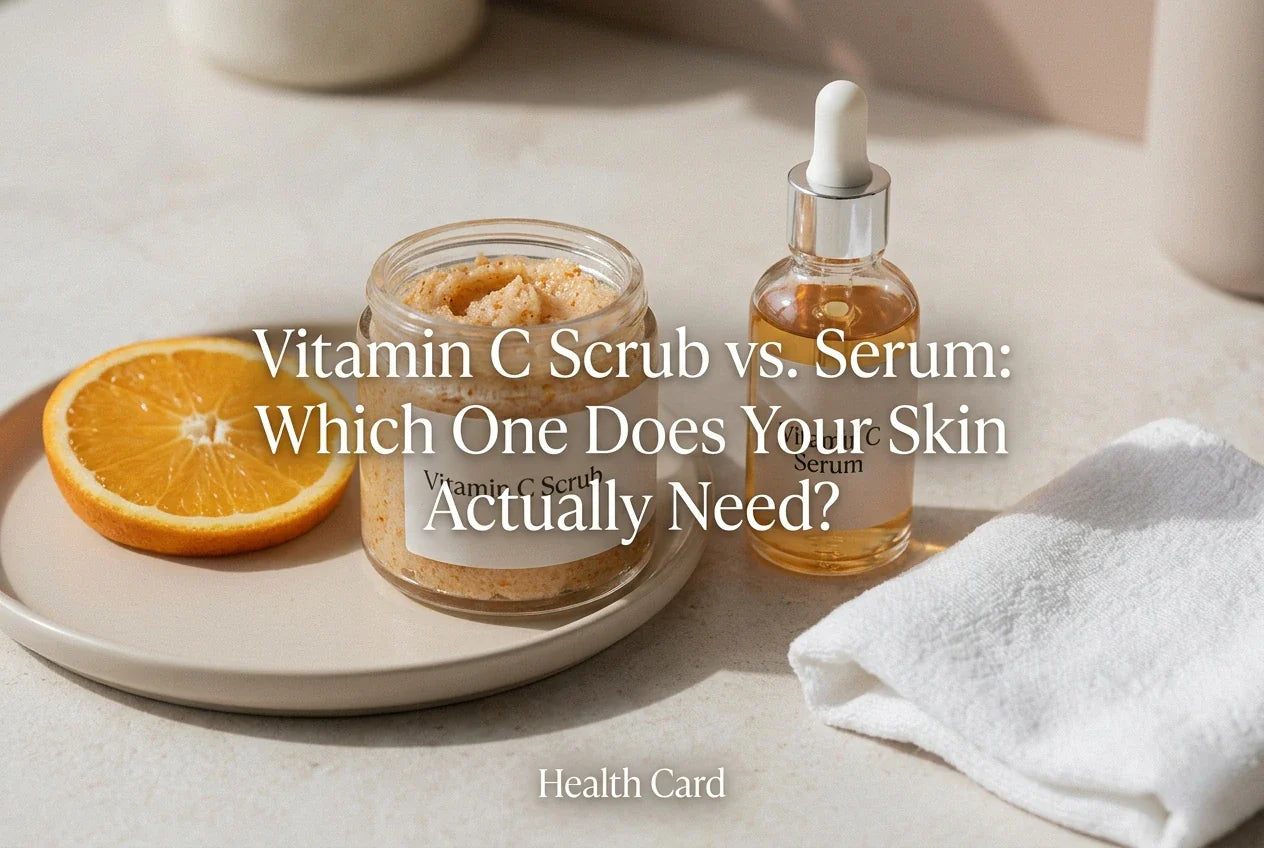
If you have ever stood in front of your skincare shelf wondering whether to reach for your Vitamin C scrub or your Vitamin C serum, you are not alone. The Vitamin C scrub vs. serum debate is one of the most common skincare confusions in Pakistan right now, and the reason people get it wrong is simple: both products have Vitamin C in their name, and both promise brighter, more even skin. But what they do, how deep they work, and when you should use each one is completely different. Getting this wrong means you either under-treat your skin or overwork it, and neither gives you the glow you are after. This guide breaks it all down clearly so you know exactly what each product does and how to use both to actually get results.
What Competitors Get Wrong About This Topic
The top ranking blogs on Vitamin C scrub vs. serum tend to talk about the two products in isolation, as if you have to choose one and forget the other forever. They compare formulas, ingredients, and skin types, but almost none of them explain how these two products connect in a real skincare routine. Most also skip the climate factor entirely, which matters a lot in Pakistan where the sun is intense, the air can be either very dry or very humid depending on the season, and hyperpigmentation is one of the most common skin concerns. This guide fixes all of that.
Understanding Vitamin C in Skincare
Before getting into the comparison, it helps to understand what Vitamin C actually does on the skin regardless of which product it is in.
Vitamin C, also known as ascorbic acid in its purest form, is one of the most well-researched and dermatologist-recommended ingredients in skincare. It works as a powerful antioxidant, which means it neutralizes free radicals caused by sun exposure, pollution, and environmental stress. It also inhibits melanin production, which is the reason it fades dark spots, post-acne marks, and hyperpigmentation over time. On top of that, it supports collagen synthesis, which helps firm the skin and soften the appearance of fine lines.
The ingredient exists in several forms including ascorbic acid (L-ascorbic acid), sodium ascorbyl phosphate, and ascorbyl glucoside. The more stable forms like sodium ascorbyl phosphate are gentler on the skin and better suited for sensitive skin types, while L-ascorbic acid at higher concentrations delivers faster and more potent results.
Now here is where the scrub and the serum diverge completely.
What Is a Vitamin C Scrub?
A Vitamin C scrub is a physical exfoliant. It contains small particles, which can be sugar granules, walnut shell powder, rice bran, jojoba beads, or finely milled minerals, that manually lift and remove dead skin cells from the surface of the skin when you massage it in circular motions. The Vitamin C in the formula adds an antioxidant and brightening benefit while the scrubbing action is doing the surface work.
What a Vitamin C Scrub Actually Does
When you use a Vitamin C face scrub, the physical exfoliation breaks the bonds between dead skin cells and the surface of the skin, clearing away the layer of buildup that makes skin look dull, rough, and uneven. This is called mechanical or physical exfoliation. The process also stimulates circulation, which gives the skin an immediate fresh and slightly flushed appearance right after use.
Because dead skin cells create a barrier on the skin's surface, any skincare product you apply after exfoliating absorbs significantly better. This is one of the most important things most people overlook: a Vitamin C scrub does not just clean the skin, it prepares it to receive everything you apply after it, including your serum.
The Vitamin C in the scrub also begins addressing surface-level dullness by neutralizing oxidative stress right at the point of contact, giving you a brighter appearance even before your serum gets involved.
How Often Should You Use a Vitamin C Scrub?
A Vitamin C face scrub should be used two to three times a week, not daily. Over-exfoliating strips the skin's natural oils, damages the moisture barrier, and can trigger breakouts, especially in Pakistani summers when the skin is already dealing with heat and humidity. People with sensitive or acne-prone skin should start with once a week and see how the skin responds before increasing frequency.
Always apply a scrub to damp skin, massage gently in circular motions for one to two minutes, and rinse thoroughly with lukewarm water.
What Is a Vitamin C Serum?
A Vitamin C serum is a concentrated liquid treatment. It has a thin, lightweight consistency, a high concentration of active Vitamin C, and is formulated to penetrate through the outer layer of the skin into the deeper layers where it can stimulate collagen production, neutralize free radicals at a cellular level, and steadily inhibit the melanin production responsible for dark spots and uneven skin tone.
What a Vitamin C Serum Actually Does
Unlike a scrub, a serum does not sit on the skin surface. It absorbs into the skin within minutes of application and begins working at a deeper level over time. This is what makes it a treatment product rather than a prep or cleansing product.
A good Vitamin C serum used consistently over four to eight weeks produces visible changes in skin brightness, evenness of tone, reduction in the appearance of dark spots, and improved firmness from the collagen support. These are not instant results, but they are real, lasting results that go beyond surface-level glow.
Serums are also where ingredient combinations matter most. A Vitamin C serum that contains Vitamin E alongside Vitamin C is significantly more effective because Vitamin E stabilizes Vitamin C and amplifies its antioxidant power. Adding ferulic acid to this combination further boosts stability and efficacy, which is why skincare experts consistently recommend looking for these pairings when choosing a serum.
Herbsalot's Vitamin C Brightening Serum is formulated to address dullness, uneven skin tone, and dark spots with a brightening blend suited to Pakistani skin.
How Often Should You Use a Vitamin C Serum?
A Vitamin C serum can be used daily, and dermatologists generally recommend using it every morning. Applied in the morning, it provides antioxidant protection against the UV exposure and pollution you face throughout the day. Some people with resilient skin use it morning and evening, but once daily is sufficient for most people.
Apply two to four drops onto clean, dry skin and press it gently into the face with your fingertips. Follow with a moisturizer to lock in hydration, and always finish with sunscreen in the morning, because Vitamin C makes the skin more effective at fighting UV damage but it does not replace SPF protection.
Vitamin C Scrub vs. Serum: The Core Differences
|
Feature |
Vitamin C Scrub |
Vitamin C Serum |
|
Type of Product |
Physical exfoliant |
Active treatment |
|
How It Works |
Removes dead skin cells from surface |
Penetrates into skin layers |
|
Depth of Action |
Surface level |
Deep, cellular level |
|
Frequency of Use |
2 to 3 times per week |
Daily |
|
Results Timeline |
Immediate smoother texture |
4 to 8 weeks of consistent use |
|
Main Benefit |
Exfoliation, skin prep, surface brightening |
Dark spot fading, collagen support, lasting glow |
|
Replaces the Other? |
No |
No |
|
Best Time to Use |
During shower or cleansing routine |
After cleansing, before moisturizer |
The single most important thing this table tells you is that neither product replaces the other. They target completely different layers of the skin and perform completely different functions. Using one without the other leaves a gap in your routine.
The Real Relationship Between a Vitamin C Scrub and a Vitamin C Serum
Here is something that no competitor blog talks about directly: a Vitamin C scrub and a Vitamin C serum actually work better together than either one does alone.
When you exfoliate with a Vitamin C scrub, you clear away the layer of dead skin cells that would otherwise slow down and limit how deeply your serum absorbs. On days you use the scrub, your Vitamin C serum absorbs faster, reaches deeper layers more efficiently, and starts working sooner. Think of the scrub as the preparation step and the serum as the treatment step. One clears the path and the other walks it.
This is also why the order of application matters. You never apply serum before scrubbing. Always scrub first, rinse, pat dry, and then apply your serum. This sequence lets you get the maximum benefit from both products without doubling the Vitamin C load in a way that irritates the skin.
Which One Is Better for Common Pakistani Skin Concerns?
For Dark Spots and Hyperpigmentation
This is one of the most common concerns for people across Pakistan, where sun exposure is intense and post-acne marks are extremely common. A Vitamin C serum is the primary tool for addressing dark spots and hyperpigmentation because it works at the level where melanin production happens. The scrub supports the process by removing dead skin cells that make pigmented areas look darker and more uneven on the surface.
Both products working together produce faster and more visible results than using a serum alone.
For Dull, Tired-Looking Skin
If your skin has lost its glow and looks flat or grey, the Vitamin C scrub gives you the fastest visible improvement because physical exfoliation immediately removes the dull outer layer. The serum then maintains and builds on that brightness over time.
For Uneven Skin Texture
The scrub is your primary tool here. Rough patches, bumpy texture, and enlarged pores respond to regular physical exfoliation better than to serum alone. The serum supports by keeping the freshly exposed skin healthy and protected.
For Anti-Aging and Skin Firmness
The Vitamin C serum is the tool for collagen support and firming. Its active ingredients reach the dermis where collagen production happens, and consistent use over weeks produces a noticeable improvement in skin firmness and the reduction of fine lines. The scrub contributes by keeping the skin surface smooth and helping other anti-aging products absorb better.
How to Build a Vitamin C Skincare Routine for Pakistan's Climate
Pakistan's climate swings between intense heat and humidity in summer, dry and cold in winter, and polluted urban air year-round in cities like Karachi, Lahore, and Islamabad. Each of these factors stresses the skin differently, and a Vitamin C routine is one of the best tools to address all of them because of its antioxidant power, brightening properties, and collagen support.
Here is a practical weekly routine that works for most skin types in Pakistan:
Morning (Daily) Cleanser, Vitamin C Serum, Moisturizer, Sunscreen
Evening (Daily) Cleanser, Moisturizer or Night Cream
Two to Three Times a Week (Replace Cleanser Step) Vitamin C Scrub, Vitamin C Serum, Moisturizer
On exfoliation days, skip the separate cleanser. The scrub handles the cleansing and exfoliation in one step. Follow directly with your serum and moisturizer.
If you have been building your broader skincare routine and want to understand how moisturizing fits into the complete picture, the breakdown of different moisturizer types and how they work is a useful read alongside this guide.
Common Mistakes People Make With Vitamin C Products
Using both Vitamin C scrub and serum on the same day in the wrong order. The scrub always comes first. Applying serum and then scrubbing over it is a waste of product and can irritate freshly treated skin.
Over-exfoliating with the scrub. Using a Vitamin C scrub every day strips the skin of its natural protective barrier. Two to three times a week is enough. More than that causes more damage than good, especially on acne-prone or sensitive skin.
Expecting overnight results from the serum. A Vitamin C serum is a long-game product. The dark spot fading and collagen support it delivers are cumulative. Most people begin to notice visible changes after four to six weeks of consistent morning use.
Skipping sunscreen after using Vitamin C. Vitamin C helps your skin fight UV damage more effectively, but it does not block UV rays on its own. Skipping SPF after applying your Vitamin C serum makes the whole routine less effective. Sunscreen is not optional in a Vitamin C routine, particularly in Pakistan where UV index levels are high for most of the year.
Buying a Vitamin C product and storing it incorrectly. Vitamin C, especially in the form of L-ascorbic acid, oxidizes quickly when exposed to light and air. Store your serum in a dark, cool location and keep the cap tightly closed. If your serum has turned orange or brown, it has oxidized and is no longer effective.
Using a Vitamin C serum that is too strong too soon. Starting with a high-concentration Vitamin C serum like 20% ascorbic acid can cause redness, tingling, and irritation, particularly for people who have not used actives before. Start with a gentler formula in the 10% to 15% range and increase slowly as your skin adjusts.
A Note on Vitamin C Forms: What to Look For on the Label
Not all Vitamin C in skincare is the same. Here is what the ingredient labels actually mean:
L-Ascorbic Acid is the purest and most potent form. It delivers the strongest results but also oxidizes faster and can irritate sensitive skin at high concentrations. Look for it in serums formulated at a pH below 3.5 for best efficacy.
Sodium Ascorbyl Phosphate (SAP) is a stable, water-soluble form of Vitamin C. It is gentler, works well in scrubs and daily-use products, and is a great option for people with sensitive or reactive skin.
Ascorbyl Glucoside is another stable derivative that converts to ascorbic acid on the skin. It is milder and well-suited for beginners or people building their first Vitamin C routine.
Magnesium Ascorbyl Phosphate is the mildest and most moisturizing form, making it ideal for dry or sensitive skin types.
The American Academy of Dermatology recommends looking for well-formulated products with stable Vitamin C derivatives when building a brightening routine. You can read more about choosing skincare actives at aad.org.
Frequently Asked Questions
Q1. Can I use a Vitamin C scrub and Vitamin C serum together?
Yes, and you should. They work at different levels of the skin and complement each other very well. Use the scrub two to three times a week during your cleansing step, then follow with your serum. On non-scrub days, use your serum directly after cleansing. This combination gives you both surface exfoliation and deeper treatment from the same ingredient, making your overall results faster and more visible.
Q2. Which is better for dark spots, Vitamin C scrub or serum?
For actual dark spot fading, the serum is the more powerful tool because it penetrates into the skin layers where melanin production happens. The scrub helps by clearing dead skin cells that make dark spots look more prominent, and it also allows the serum to absorb more effectively. For the best results on dark spots in Pakistan's sun-heavy climate, use both consistently.
Q3. Can I use a Vitamin C serum every day?
Yes. A Vitamin C serum is designed for daily use and works best when applied every morning to clean skin before your moisturizer and sunscreen. Daily use builds the antioxidant protection and brightening effects cumulatively over time. If you are new to Vitamin C, start with every other day for the first two weeks to let your skin adjust, then move to daily use.
Q4. How long does a Vitamin C serum take to show results?
Most people start seeing visible differences in skin brightness and an improvement in overall glow within three to four weeks of consistent daily use. For darker spots and hyperpigmentation, expect six to eight weeks before the results become clearly noticeable. Results depend on your skin type, the concentration of Vitamin C in the formula, and whether you are consistent with sunscreen during the process.
Q5. Is a Vitamin C scrub safe for sensitive skin?
It can be, depending on the formula. A Vitamin C scrub with fine, non-abrasive particles like jojoba beads or rice bran and a gentle Vitamin C derivative like sodium ascorbyl phosphate is generally well-tolerated by sensitive skin. Avoid scrubs with large, coarse particles or fragrances if your skin is easily irritated. Start with once a week, patch test on your jawline first, and increase frequency only if your skin responds well.
Conclusion
The Vitamin C scrub vs. serum comparison is not about picking a winner. The scrub prepares your skin, and the serum treats it. Use the scrub to clear the surface, improve texture, and prime your skin for absorption. Use the serum daily to build lasting brightness, fade dark spots, and support collagen over time. Together, they form one of the most effective and straightforward brightening routines you can build for your skin.
If you are starting with Vitamin C skincare for the first time, begin with the serum as your daily step and introduce the scrub twice a week once your skin is comfortable with the active ingredient.


