

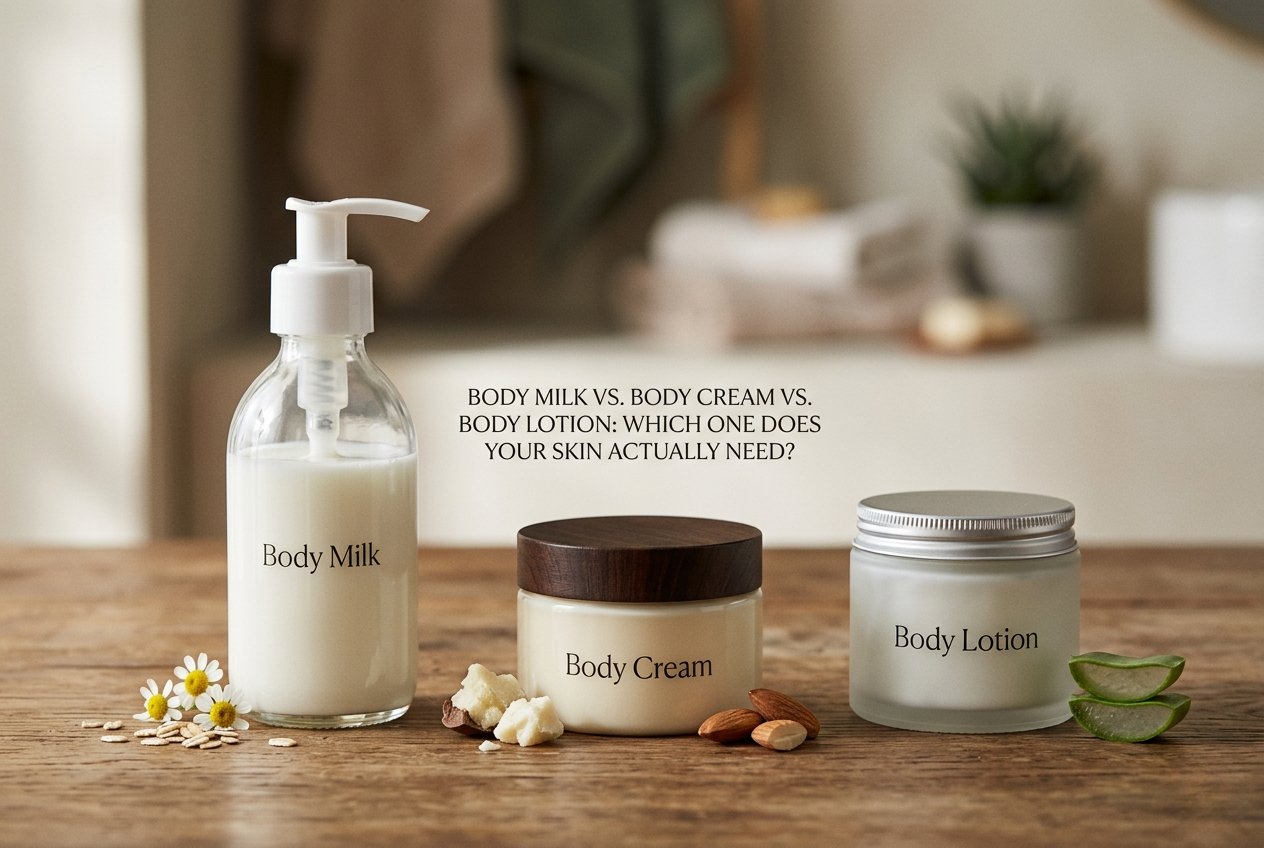
Walk into any skincare aisle or scroll through any beauty page in Pakistan and you will see shelves full of body moisturizers with names that all sound similar. Body milk vs. body cream vs. body lotion is one of the most googled skincare questions, and for good reason. The packaging looks almost the same, the promises overlap, and most of us have been grabbing whichever one is on sale without really knowing the difference. But here is the thing: these three products work very differently on the skin, and choosing the wrong one for your skin type or season can leave you feeling greasy, too dry, or just not getting the hydration you are paying for.
This guide is going to break it all down in plain terms, the ingredients, the texture, the right skin type for each, and exactly when to use which product so your skin stays soft, nourished, and healthy no matter the weather.
What Makes a Body Moisturizer Different From the Other?
Before diving into the comparison, it helps to understand what every body moisturizer is trying to do. Each one, whether it is a body milk, body lotion, or body cream, is built around a mix of water, oils, emulsifiers, and active ingredients. The difference comes down to how much water versus how much oil is in the formula, which directly controls the texture, absorption speed, and level of hydration delivered to the skin.
The water-to-oil ratio is everything. A product with more water feels lighter, absorbs faster, and suits oily or normal skin better in warmer months. A product with more oil sits richer on the skin, creates a longer-lasting moisture barrier, and suits dry or mature skin.
With that base understanding, here is how each product stands apart.
Body Milk: The Lightweight Everyday Hydrator
Body milk is the lightest of the three. Its texture is fluid, almost watery, and it spreads across the skin very easily. The high water content and low oil concentration mean it absorbs quickly without leaving a greasy or sticky feeling behind. This is exactly why body milk is such a great choice for daily use, especially in warm and humid climates like the ones across Pakistan.
What Is Body Milk Made Of?
Body milk typically contains a blend of water, light plant-based oils such as almond oil or sunflower oil, humectants like glycerin or hyaluronic acid, and skin-brightening or nourishing actives depending on the formula. Some body milks now include ingredients like Vitamin C, alpha arbutin, ceramides, and cocoa butter to offer more than just surface hydration.
Who Should Use Body Milk?
Body milk works best for people with normal to oily skin. It is also a practical choice for combination skin types who want all-over hydration without feeling heavy. During Pakistan's summer months, when heat and humidity are at their peak, body milk is the smarter option for most skin types because it does not trap excess heat on the skin.
People with dry patches on specific areas like knees, elbows, or heels can still use body milk all over and then layer a richer product on the dry spots.
When to Use Body Milk
The best time to apply body milk is right after a shower, when the skin is still slightly damp. This helps seal in the moisture from the water rather than just sitting on top of dry skin. Body milk is fast-absorbing, which means you can get dressed within a minute or two without worrying about transferring it onto your clothes.
If you are in Karachi, Lahore, Islamabad, Faisalabad, or any other city where summers stretch for months, body milk is your go-to moisturizer for the warm season.
At Herbsalot, you can explore a range of body milk options including Vitamin C Brightening Body Milk, Alpha Arbutin Brightening Body Milk, and Cocoa Butter Body Milk, each formulated to hydrate the skin while targeting specific concerns like dullness, uneven tone, or dryness.
Body Lotion: The All-Rounder for Daily Skin Hydration
Body lotion sits between body milk and body cream in terms of richness. It has more oil content than a body milk but still retains a significant amount of water, making it lightweight enough for daily use while providing a deeper level of hydration than body milk alone.
What Is Body Lotion Made Of?
Body lotions are typically formulated with emollients, occlusives, and humectants. Common ingredients include shea butter in lower concentrations, glycerin, natural plant oils, and various skin-loving actives like niacinamide, aloe vera, or vitamin E. The texture is creamy but still pourable, and it spreads easily across larger surface areas of the body.
Who Should Use Body Lotion?
Body lotion is one of the most versatile moisturizers available and suits a wide range of skin types. People with normal to slightly dry skin can use body lotion as their daily moisturizer year-round. For those with very dry skin, body lotion works well in spring and early autumn when the skin needs more than body milk but does not require the full intensity of a body cream.
Body lotion is also a solid choice for people who want a moisturizer that layers easily under other skincare products or perfume.
When to Use Body Lotion
Body lotion is ideal for post-shower application as part of a daily body care routine. It works particularly well during transitional weather seasons in Pakistan, such as spring from February to April and autumn from October to November, when the skin needs a bit more care than in peak summer but not the full heaviness of a winter cream.
Body Cream: Deep Nourishment for Dry and Dehydrated Skin
Body cream is the richest and most intensive of the three. It has a higher oil concentration and lower water content, which gives it a thick, luxurious texture that takes longer to absorb but creates a much stronger and longer-lasting moisture barrier on the skin.
What Is Body Cream Made Of?
Body creams are built around heavy emollients and occlusives such as shea butter, cocoa butter, beeswax, lanolin, olive oil, or jojoba oil. These ingredients create a physical barrier on the skin's surface that locks in moisture and prevents transepidermal water loss, which is the process by which water naturally evaporates from the skin into the air. This is what makes body cream so effective for people whose skin feels tight, rough, or cracked.
Many body creams also include skin-conditioning actives like ceramides, squalane, or allantoin to support the skin barrier while delivering nourishment deep into the layers of the skin.
Who Should Use Body Cream?
Body cream is designed for people with dry to very dry skin, mature skin, or anyone who deals with rough patches on specific areas like elbows, knees, hands, or feet. It is particularly useful for people whose skin feels tight after bathing, or who experience flakiness during the winter months.
In Pakistan, body cream becomes especially relevant during the cooler months from November to February, when the dry air in cities like Islamabad, Peshawar, and Lahore pulls moisture from the skin. People in drier regions or those who spend a lot of time in air-conditioned environments also benefit from the deeper protection that body cream provides.
Herbsalot offers body creams like the Olive Silk Body Cream and Body Silk Moisturizing Cream, which are formulated with nourishing ingredients to give the skin a soft, healthy feel without a heavy or greasy finish.
When to Use Body Cream
Body cream works best when applied at night, as part of an evening skin routine, because the skin goes into repair mode during sleep and absorbs ingredients more effectively. Apply it to damp skin after a bath to maximize absorption. Focus on the driest areas first like the heels, elbows, and knees, and use a lighter product on areas that do not get as dry.
You can also use body cream in the morning during winter if your skin needs extra protection before going outside in cold or windy weather.
Body Milk vs. Body Cream vs. Body Lotion: Side-by-Side Comparison
|
Feature |
Body Milk |
Body Lotion |
Body Cream |
|
Texture |
Light, watery, fluid |
Medium, creamy |
Thick, rich, dense |
|
Water Content |
High |
Medium |
Low |
|
Oil Content |
Low |
Medium |
High |
|
Absorption Speed |
Very fast |
Fast |
Slower |
|
Best Skin Type |
Normal to oily |
Normal to dry |
Dry to very dry |
|
Best Season |
Summer, monsoon |
Spring, autumn |
Winter, dry months |
|
Ideal Use Time |
Morning, post-shower |
Morning or night |
Night, or dry areas |
|
Greasy Feel |
None |
Minimal |
Can feel heavier |
|
Hydration Level |
Light |
Moderate |
Intense |
How Pakistan's Climate Affects Which Moisturizer You Need
Pakistan's geography creates a wide range of climate conditions across the country, and this directly impacts which body moisturizer is best for your skin at any given time of year.
In coastal cities like Karachi, the humidity remains relatively high for much of the year. Here, body milk is ideal for most seasons because the air already provides some ambient moisture and a heavy cream can feel suffocating on the skin.
In Punjab cities like Lahore, Faisalabad, and Multan, the summers are intensely hot and the winters become noticeably dry. A good strategy is to use body milk in summer and switch to body lotion or body cream from November onwards as the temperatures drop and the air becomes drier.
In cities like Islamabad, Peshawar, and areas across KPK, the winter months can be cold and harsh on the skin. Body cream becomes a necessity during this period, especially for exposed areas like hands, arms, and legs.
Understanding your local climate is just as important as understanding your skin type when it comes to choosing between body milk, lotion, or cream.
Common Mistakes People Make When Choosing a Body Moisturizer
Using the same product year-round regardless of season. Skin needs change with the weather. A body milk that works perfectly in June can leave your skin feeling dry and tight in December. Adjust your moisturizer as the seasons shift.
Applying moisturizer to completely dry skin. All three products work better when applied to slightly damp skin. After a shower, pat yourself down gently but do not wait until your skin is bone dry before applying your moisturizer. The leftover moisture on your skin helps lock in hydration.
Assuming oily skin does not need a moisturizer. This is one of the most widespread skincare myths. Oily skin still needs hydration because when the skin feels dehydrated, it can overproduce oil to compensate. A lightweight body milk is the right solution, not skipping moisturizer altogether.
Using body cream on oily areas. Applying a rich body cream all over oily skin can lead to clogged pores and breakouts. If you have combination skin, use body milk on oilier areas and reserve the body cream only for very dry patches.
Not reading the ingredient list. Two products can both be labeled as body milk and still perform very differently. Look for humectants like hyaluronic acid and glycerin for lightweight hydration, and look for emollients like shea butter or olive oil if you want deeper nourishment.
How to Build a Skin Type Skincare Routine for Your Body
For Oily Skin
Use body milk daily after showering. Look for formulas that contain glycerin, hyaluronic acid, or niacinamide, which hydrate the skin without adding excess oil. Avoid heavy creams on the chest, back, and shoulders.
For Normal Skin
Body lotion is your everyday staple. Switch to body milk during hot months and lean toward body cream only during dry winter months or for targeting rough spots.
For Dry Skin
Use body lotion as your daily moisturizer and add body cream at night or during cold weather. Pay extra attention to the knees, elbows, and heels with a targeted cream application.
For Very Dry or Mature Skin
Body cream should be your primary moisturizer, especially in winter. Use it after every shower and reapply on extremely dry areas before bed. Ingredients like ceramides, shea butter, and squalane are your best friends.
For Sensitive Skin
Choose fragrance-free formulas where possible. Body milk tends to be the gentlest option for sensitive skin because the high water content and lower oil concentration mean less chance of irritation or blocked pores. According to the American Academy of Dermatology, fragrance-free and dye-free moisturizers are the safest choice for sensitive skin types. You can find their guidance on moisturizers at aad.org.
Frequently Asked Questions
Q1. What is the difference between body milk and body lotion?
Body milk is lighter than body lotion. It has a higher water content and lower oil concentration, which makes it absorb into the skin very quickly without leaving any greasy or sticky feeling behind. Body lotion is slightly richer and works better for dry skin, while body milk is ideal for normal to oily skin and is the smarter choice during Pakistan's long, hot summers.
Q2. Can you use body cream every day?
Yes, you can use body cream daily, but it is best suited for people with dry to very dry skin. Applying a heavy cream every day on normal or oily skin can clog pores and make the skin feel congested. If your skin is normal, stick to body milk or body lotion as your daily moisturizer and reserve body cream for very dry patches or the winter months when your skin genuinely needs the extra nourishment.
Q3. Which moisturizer is best for Pakistani summer?
Body milk is the best option for Pakistani summer. Its lightweight texture, fast absorption, and non-greasy finish make it comfortable to wear even in extreme heat and humidity. Whether you are in Karachi, Lahore, or Islamabad, a good body milk keeps your skin hydrated throughout the day without feeling heavy. Herbsalot's body milk range includes options with Vitamin C and Alpha Arbutin that hydrate while also targeting dullness and uneven skin tone.
Q4. What is the correct way to apply body lotion or body milk?
The best time to apply body lotion or body milk is right after a shower when your skin is still slightly damp. Applying on completely dry skin reduces how well the product works because a moisturizer seals in existing moisture rather than creating it from scratch. Take a small amount in your palms, warm it slightly by pressing your hands together, and massage it into your skin using gentle circular motions until your whole body is covered.
Q5. Can people with oily skin use a body moisturizer?
Absolutely, and they should. Oily skin still needs hydration. When your skin is dehydrated, the sebaceous glands tend to overproduce oil to compensate, which can make oiliness worse over time. The right solution for oily skin is not to skip moisturizer but to choose a lightweight body milk or a non-comedogenic body lotion that hydrates the skin without blocking pores or adding extra grease.
Conclusion
The right choice between body milk, body cream, and body lotion comes down to your skin type and the season you are in. Body milk for summer and oily skin, body lotion for everyday normal skin, and body cream for dry skin and cold months. Match the product to your skin's actual needs and your routine becomes both simpler and more effective.
For more skincare guidance tailored to Pakistan's climate, check out our Summer Skincare Routine in Pakistan and browse all our herbal skincare tips to build a routine that genuinely works for you.


